


Age estimation
Predicting someone's rough age from a signal like a selfie, voice sample, or account activity, most often a selfie, without collecting an ID.
For example, a person takes a quick selfie, and the system returns an estimated age or confirms they are comfortably above the required age, with no document involved.
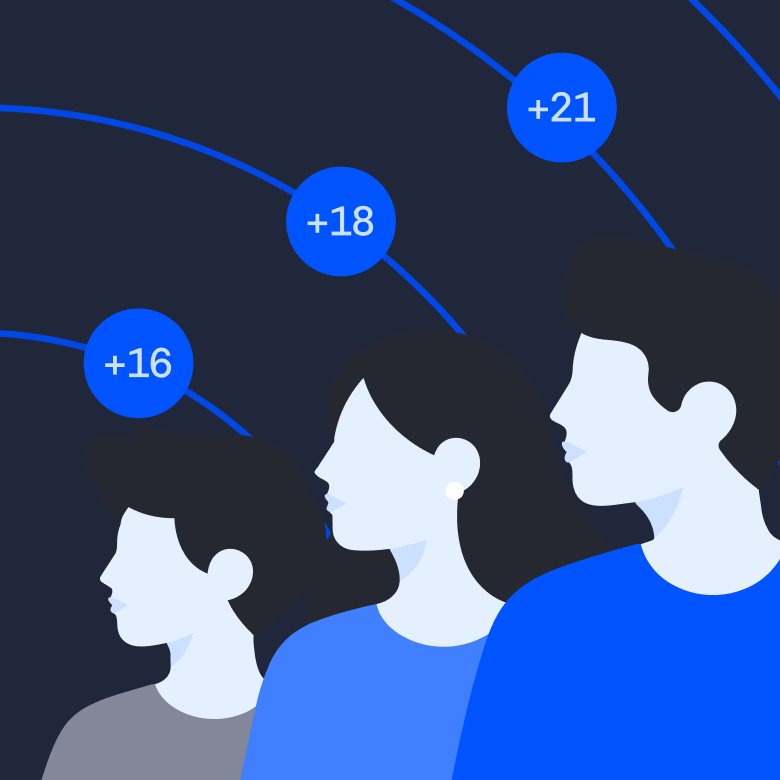
Model-based inference of an age range from a biometric or behavioral signal, most commonly facial imagery, evaluated against a challenge-age threshold. A challenge age is a cutoff set above the legal age, so anyone estimated close to the line gets a second check.
A typical facial age estimation flow works like this:
- The person takes a selfie, usually with a liveness check to confirm a real person is present.
- A model analyzes the image and outputs an estimated age or age range.
- The service compares the estimate with its challenge age.
- People estimated safely above the line pass. People near or below it are sent to another method, such as an ID check.
The signal can come from different places:
- Facial imagery is the most common source.
- Voice samples can also support an estimate.
- Behavioral signals, such as account activity, can add context.
Age estimation sits next to terms that are easy to mix up:
- Age verification establishes age from a verified document or record, while estimation predicts it.
- Face match compares one face with another to confirm they are the same person, while age estimation analyzes a face only for age.
For more, see Age Assurance Explained: Verification, Estimation, Segmentation, and Gating
- Term
- Age estimation
- Abbreviation
- None
- Category
- Verification
- Slug
age-estimation