




Autonomous AI agents could drive 90% of fraud by 2028
In this article, IT Brief UK reports on Incode’s research into how autonomous AI agents are changing the economics of fraud. For years, scam operations relied on large numbers of trained people, which limited how many victims they could reach. Incode’s report argues that the amount of fraud today has grown beyond what any human workforce could produce, because AI agents can now research targets, adapt to replies, and carry a scam through to payment on their own. The article places the findings within growing pressure on banks, digital platforms, and identity providers to detect AI-assisted impersonation.
Read the transcription of this article, published by IT Brief UK on August 5, 2026.
Incode has published a report arguing that autonomous AI agents are driving a sharp rise in fraud. It says agentic fraud could account for 90% of all fraud by 2028.
The report links rising fraud losses to the spread of AI systems that can run scams with limited human involvement. It argues that the growth in reported losses cannot be explained by an increase in human fraudsters alone.
According to the report, documented AI-enabled fraud cases in the US grew more than fivefold between 2023 and 2025 after years near zero. It says reported losses across catalogued cases were close to USD $900 million, while noting the total is likely higher because only a small share of global scam losses appears in official data.
To support its argument, Incode drew on independently sourced case data and federal loss figures. It says the fraud categories that autonomous agents can run are also the ones showing the fastest growth in data from the FBI Internet Crime Complaint Centre and the Federal Trade Commission.
Fraud patterns
Voice cloning appeared in more than half of the cases Incode catalogued. The company also identified AI chatbots and agents running scams from first contact to payment as the fastest-growing method in the dataset.
The report says nine in 10 catalogued incidents fell into fraud types that an autonomous agent could fully execute. These scams include activity in which software can research a target, start a conversation, adjust its approach in response to replies and repeat the process at scale.
The analysis also points to changes in the criminal supply chain. Payments to vendors offering AI scam services have risen by about 1,900% since 2021, while AI-generated phishing messages convert 4.5 times better than human-written attempts, according to Incode. It adds that 90% of fraud professionals report facing more AI-driven attacks.
At the core of the report is the claim that automation is changing the economics of fraud. Instead of relying on large numbers of trained operators, scammers can now use software tools and access to AI models to repeat attacks across thousands of targets at low cost.
Loss figures
Federal data cited in the report points to a broad rise in fraud losses. The FBI IC3 recorded USD $20.9 billion in reported US cyber-enabled losses in 2025, while the FTC also recorded a record high, Incode says.
That growth has come as estimates of the global scam workforce remain limited. Incode cites a United Nations estimate that about 300,000 trafficked people are held in scam compounds, using the figure to argue that fraud output has expanded faster than the likely pool of human operators.
The report says global scam losses are increasing by nearly 20% a year. It argues that the widening gap between a bounded labour force and rising losses points to machine-led scale rather than a simple increase in headcount.
Incode also included a projection model suggesting US fraud losses could rise by as much as 25 times as automation deepens. That forecast underpins its argument that agentic fraud is shifting from an emerging risk to an established part of the fraud landscape.
Industry response
The findings come as identity verification providers, banks and digital platforms face increasing scrutiny over their ability to detect AI-assisted impersonation and social engineering. Voice cloning, synthetic identities and automated chat systems have become more common concerns for fraud teams as generative AI tools become cheaper and easier to deploy.
For companies that rely on remote onboarding and digital customer service, the challenge is no longer limited to spotting fake documents or unusual transactions. It increasingly involves detecting coordinated behaviour from software agents that can mimic human responses over extended interactions.
Incode, which sells identity verification and fraud prevention software, frames the issue as a structural shift in how scams are organised. The report argues that autonomous systems are moving fraud from labour-intensive operations to a model built on repeatable software workflows.
Ricardo Amper, Founder and Chief Executive Officer at Incode, said the report reflects a break from the historical limits on fraud operations.
"For all of history, fraud was capped by how many skilled people a criminal operation could hire. That cap is gone," said Ricardo Amper, Founder and Chief Executive Officer at Incode. "The same architecture that can staff a company with tireless digital workers is already staffing scam operations with tireless digital criminals - fluent in every language, awake at every hour, and nearly free to copy. Fraud is growing fastest exactly where autonomous agents can do the work. That is not a coincidence - that is agentic fraud."
About IT Brief
IT Brief covers enterprise technology news for CIOs, IT managers and decision-makers in business and government across the United Kingdom. IT Brief began 22 years ago and expanded into United Kingdom 3 years ago.
About Incode
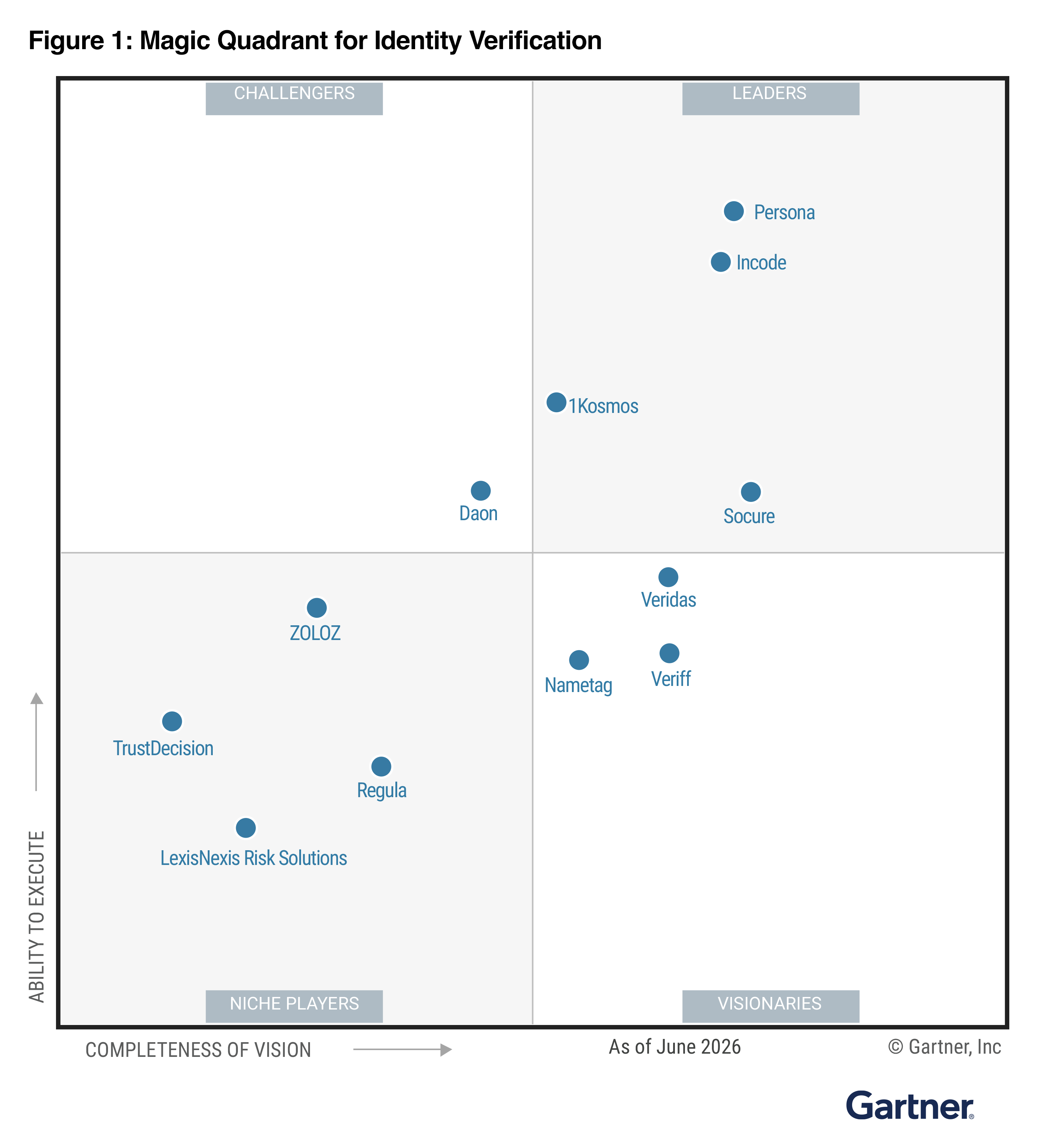
Incode is a global leader in AI-driven identity and trust, with a mission to power a world of trust at the speed of AI. The platform verifies identity and age, stops fraud, and turns verification into business enablement. Incode builds its own frontier models, adapting to any new fraud while letting good users through - trained on one of the industry's largest identity datasets: 7 billion+ trust checks and 400 million+ profiles worldwide, on a privacy-by-design architecture. Incode's customers include eight of the top ten U.S. banks, eight of the top nine U.S. telcos, three of the top three global neobanks, and four of the top five global marketplaces. Founded in 2015 in San Francisco, Incode is a team of 600+ across 25+ nationalities and a Leader in the Gartner® Magic Quadrant™ for Identity Verification.
Read the full article