



Incode buys Identiq in USD $100 million fraud push
In this article, Security Brief United Kingdom reports on Incode's acquisition of Identiq Protocol Ltd., an Israeli startup whose cryptographic tools let companies share fraud signals without sharing the underlying customer data. Incode is positioning the deal as the centerpiece of a $100 million commitment to privacy-preserving identity infrastructure. The funding will support more on-device processing, deeper research into privacy-enhancing technology, and engineering hires across Incode's offices.
Read the transcription of this article, published by Security Brief United Kingdom on June 26, 2026.
Incode buys Identiq in USD $100 million fraud push
Incode has acquired Identiq as part of a USD $100 million investment in identity and fraud prevention systems.Identiq develops cryptographic tools that let organisations share fraud signals without exposing underlying customer data. The acquisition adds that technology to Incode's existing identity verification and anti-fraud platform.
The USD $100 million commitment will fund further work on on-device processing, research into privacy-enhancing technologies, engineering hires, and international expansion. Financial terms for the acquisition were not disclosed.
The move comes as companies across banking, telecoms, and online services face a sharp rise in fraud attempts involving artificial intelligence. Incode says it has processed more than 7 billion identity verifications and has seen what it calls agentic fraud rise from 3% of fraud attempts in 2024 to 40% in the first quarter of 2026.
The company estimates that figure will exceed 90% within the next 18 months. It argues that automated scams have removed a traditional constraint on fraud by allowing far more attacks to be launched at scale.
Privacy approach
Incode says its privacy model rests on three parts: automated identity verification designed to reduce human access to biometric and identity data, the option to process biometrics on a user's device, and networked fraud detection that avoids centralised sharing of personal information.
The addition of Identiq addresses the third area. According to Incode, institutions using the system can identify repeat fraud patterns across a network while keeping customer data under their own control.
It describes this as an alternative to traditional fraud collaboration models that rely on pooled datasets or central data stores. Those older approaches, it argues, can increase exposure to breaches and create dependence on third-party data-sharing arrangements.
That issue has become more pressing as data breaches continue to climb. Incode cited the Identity Theft Resource Centre's 2025 Annual Data Breach Report, which found 3,322 data compromises in the US last year, a record level and a 79% increase over five years, while supply-chain breaches doubled over the same period.
Executive comments
Ricardo Amper, Founder and Chief Executive Officer of Incode, linked the acquisition to choices the company says it made early in its development.
"We have always believed that privacy and fraud prevention are not a tradeoff, but part of the same problem, solved together or not at all," said Ricardo Amper, Founder and Chief Executive Officer of Incode. "Identiq is the piece that enhances our Privacy by Design architecture, the natural culmination of the decisions we made on day one."
According to Incode, Identiq spent close to a decade building its technology and invested more than USD $50 million in the effort. The technology has been patented and is designed for peer-to-peer anti-fraud collaboration.
Integrating that work into Incode's system could extend the technology's reach to billions of identity checks each year. The company serves customers in sectors where repeated fraud and identity abuse are costly, including financial services, telecommunications, and digital marketplaces.
Itay Levy, Co-Founder and Chief Executive Officer of Identiq, said the business was founded around a common concern among institutions.
"Every institution shared the same concern with us: how do we fight fraud together without giving up control of our customers' data," said Itay Levy, Co-Founder and Chief Executive Officer of Identiq. "Identiq built the answer to that very question. As part of Incode, that answer is now available to every organization that deals with massive amounts of user data."
Broader market
The acquisition reflects a wider push by identity and security providers to balance tighter fraud controls with stricter data protection requirements. Banks and other regulated industries face pressure to detect synthetic identities, account takeovers, and automated scams while limiting the movement and storage of sensitive personal information.
Incode says its compliance programme includes SOC 2 Type 2, ISO/IEC 27001, HIPAA Attestation of Compliance, FedRAMP Ready, Age Check Certification Scheme, and the Kantara IAL2 Component Services Trust Mark. It also says it uses data loss prevention and continuous monitoring across the lifecycle of personal information held within its systems.
The group says its customer base includes eight of the top 10 US banks, eight of the top nine US telecoms groups, three of the top three global neobanks, and four of the top five global marketplaces. It employs more than 600 people across more than 25 nationalities.
For Incode, the purchase adds a privacy-focused tool aimed at a problem expanding quickly as AI lowers the cost and effort required to commit fraud. For Identiq, it places a specialist cryptographic product inside a larger identity platform with a global customer base and billions of annual verification checks.
Incode argues that fraudsters already collaborate across institutional boundaries, while the organisations trying to stop them often work with only a partial view of the threat data.
ncode has acquired Identiq as part of a USD $100 million investment in identity and fraud prevention systems.Identiq develops cryptographic tools that let organisations share fraud signals without exposing underlying customer data. The acquisition adds that technology to Incode's existing identity verification and anti-fraud platform.
The USD $100 million commitment will fund further work on on-device processing, research into privacy-enhancing technologies, engineering hires, and international expansion. Financial terms for the acquisition were not disclosed.
The move comes as companies across banking, telecoms, and online services face a sharp rise in fraud attempts involving artificial intelligence. Incode says it has processed more than 7 billion identity verifications and has seen what it calls agentic fraud rise from 3% of fraud attempts in 2024 to 40% in the first quarter of 2026.
The company estimates that figure will exceed 90% within the next 18 months. It argues that automated scams have removed a traditional constraint on fraud by allowing far more attacks to be launched at scale.
Privacy approach
Incode says its privacy model rests on three parts: automated identity verification designed to reduce human access to biometric and identity data, the option to process biometrics on a user's device, and networked fraud detection that avoids centralised sharing of personal information.
The addition of Identiq addresses the third area. According to Incode, institutions using the system can identify repeat fraud patterns across a network while keeping customer data under their own control.
It describes this as an alternative to traditional fraud collaboration models that rely on pooled datasets or central data stores. Those older approaches, it argues, can increase exposure to breaches and create dependence on third-party data-sharing arrangements.
That issue has become more pressing as data breaches continue to climb. Incode cited the Identity Theft Resource Centre's 2025 Annual Data Breach Report, which found 3,322 data compromises in the US last year, a record level and a 79% increase over five years, while supply-chain breaches doubled over the same period.
Executive comments
Ricardo Amper, Founder and Chief Executive Officer of Incode, linked the acquisition to choices the company says it made early in its development.
"We have always believed that privacy and fraud prevention are not a tradeoff, but part of the same problem, solved together or not at all," said Ricardo Amper, Founder and Chief Executive Officer of Incode. "Identiq is the piece that enhances our Privacy by Design architecture, the natural culmination of the decisions we made on day one."
According to Incode, Identiq spent close to a decade building its technology and invested more than USD $50 million in the effort. The technology has been patented and is designed for peer-to-peer anti-fraud collaboration.
Integrating that work into Incode's system could extend the technology's reach to billions of identity checks each year. The company serves customers in sectors where repeated fraud and identity abuse are costly, including financial services, telecommunications, and digital marketplaces.
Itay Levy, Co-Founder and Chief Executive Officer of Identiq, said the business was founded around a common concern among institutions.
"Every institution shared the same concern with us: how do we fight fraud together without giving up control of our customers' data," said Itay Levy, Co-Founder and Chief Executive Officer of Identiq. "Identiq built the answer to that very question. As part of Incode, that answer is now available to every organization that deals with massive amounts of user data."
Broader market
The acquisition reflects a wider push by identity and security providers to balance tighter fraud controls with stricter data protection requirements. Banks and other regulated industries face pressure to detect synthetic identities, account takeovers, and automated scams while limiting the movement and storage of sensitive personal information.
Incode says its compliance programme includes SOC 2 Type 2, ISO/IEC 27001, HIPAA Attestation of Compliance, FedRAMP Ready, Age Check Certification Scheme, and the Kantara IAL2 Component Services Trust Mark. It also says it uses data loss prevention and continuous monitoring across the lifecycle of personal information held within its systems.
The group says its customer base includes eight of the top 10 US banks, eight of the top nine US telecoms groups, three of the top three global neobanks, and four of the top five global marketplaces. It employs more than 600 people across more than 25 nationalities.
For Incode, the purchase adds a privacy-focused tool aimed at a problem expanding quickly as AI lowers the cost and effort required to commit fraud. For Identiq, it places a specialist cryptographic product inside a larger identity platform with a global customer base and billions of annual verification checks.
Incode argues that fraudsters already collaborate across institutional boundaries, while the organisations trying to stop them often work with only a partial view of the threat data.
About Incode
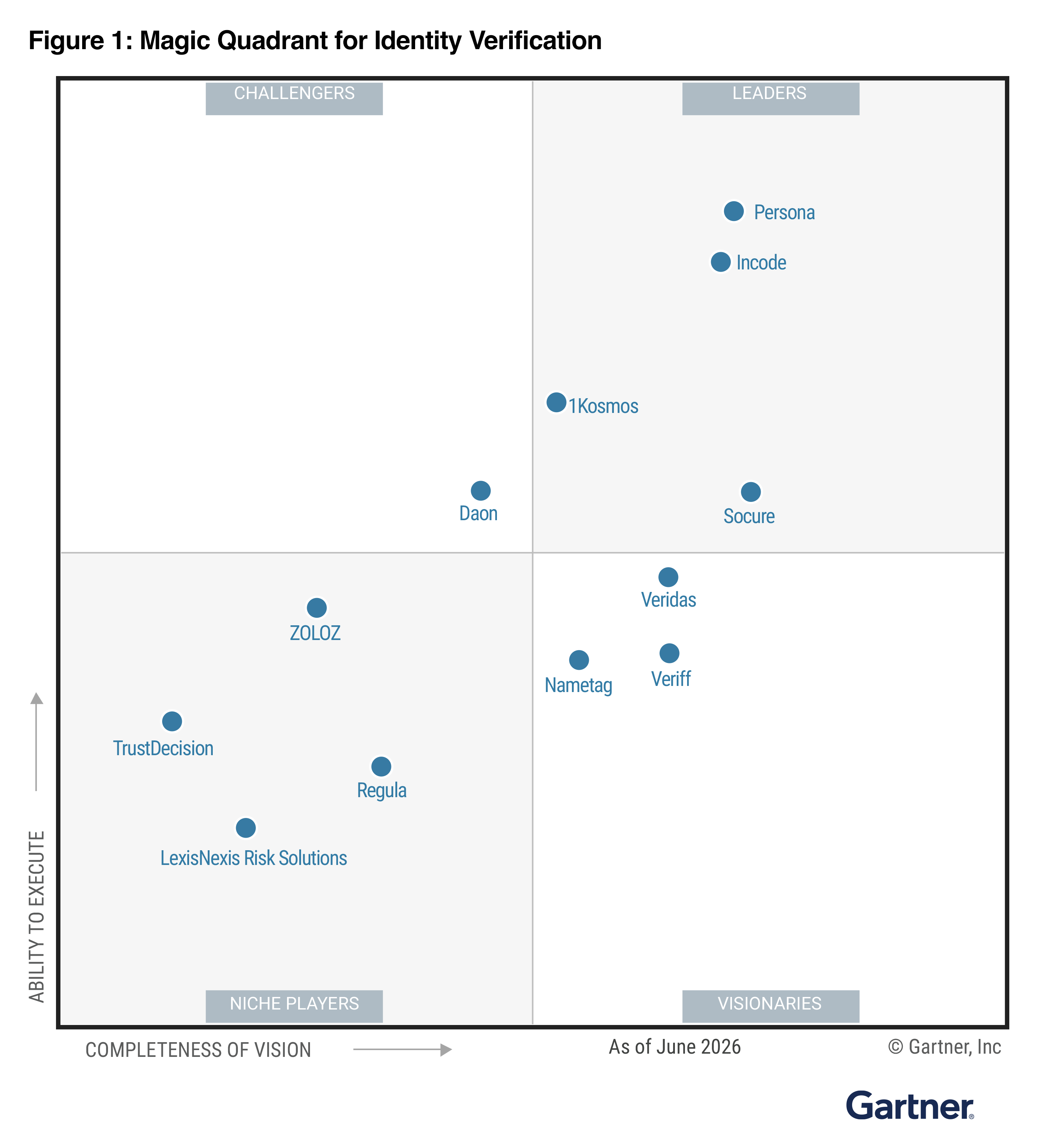
Incode is a global leader in AI-driven identity and trust, with a mission to power a world of trust at the speed of AI. The platform verifies identity and age, stops fraud, and turns verification into business enablement. Incode builds its own frontier models, adapting to any new fraud while letting good users through - trained on one of the industry's largest identity datasets: 7 billion+ trust checks and 400 million+ profiles worldwide, on a privacy-by-design architecture. Incode's customers include eight of the top ten U.S. banks, eight of the top nine U.S. telcos, three of the top three global neobanks, and four of the top five global marketplaces. Founded in 2015 in San Francisco, Incode is a team of 600+ across 25+ nationalities and a Leader in the Gartner® Magic Quadrant™ for Identity Verification.
Read the full article here