Marketplaces and platforms
Sellers and merchants prove they are real, registered businesses before the first listing goes live.
 Highlights
 Age Center
Understand Incode’s approach to age assurance
Explore the Center
Age Center
Understand Incode’s approach to age assurance
Explore the Center
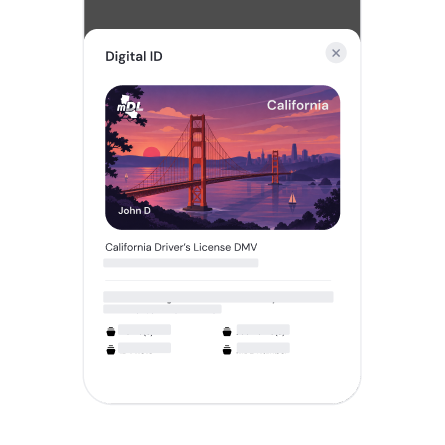 Digital ID Verification
Accept US mobile driver's licenses from every wallet
Read more
Digital ID Verification
Accept US mobile driver's licenses from every wallet
Read more
 3 years in a row named a Leader
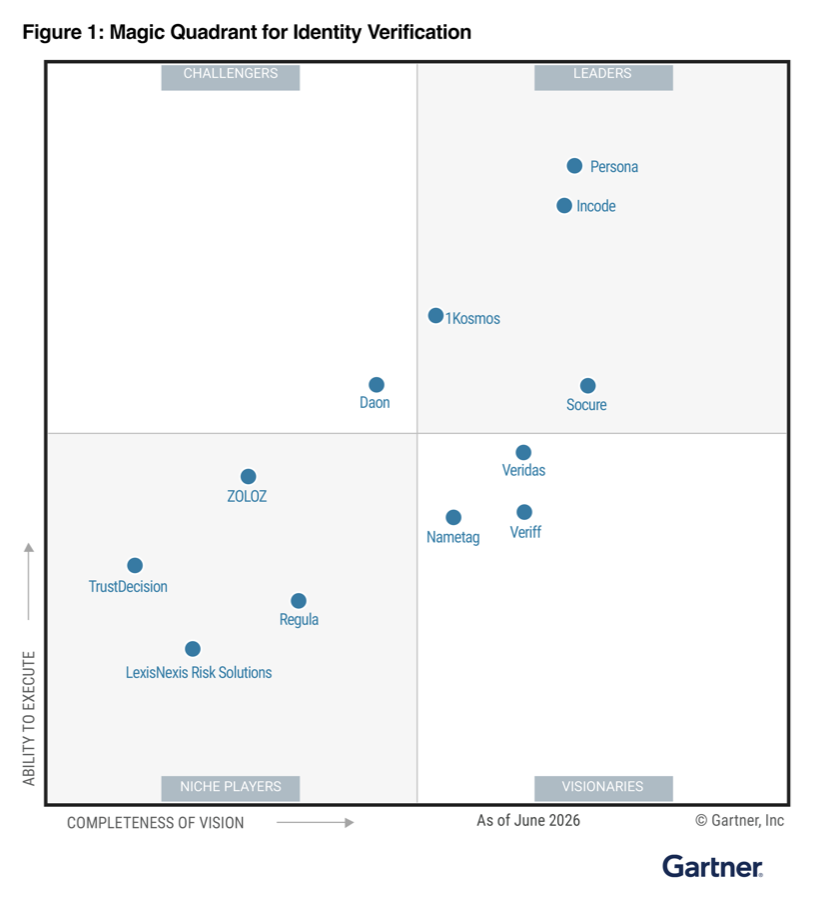
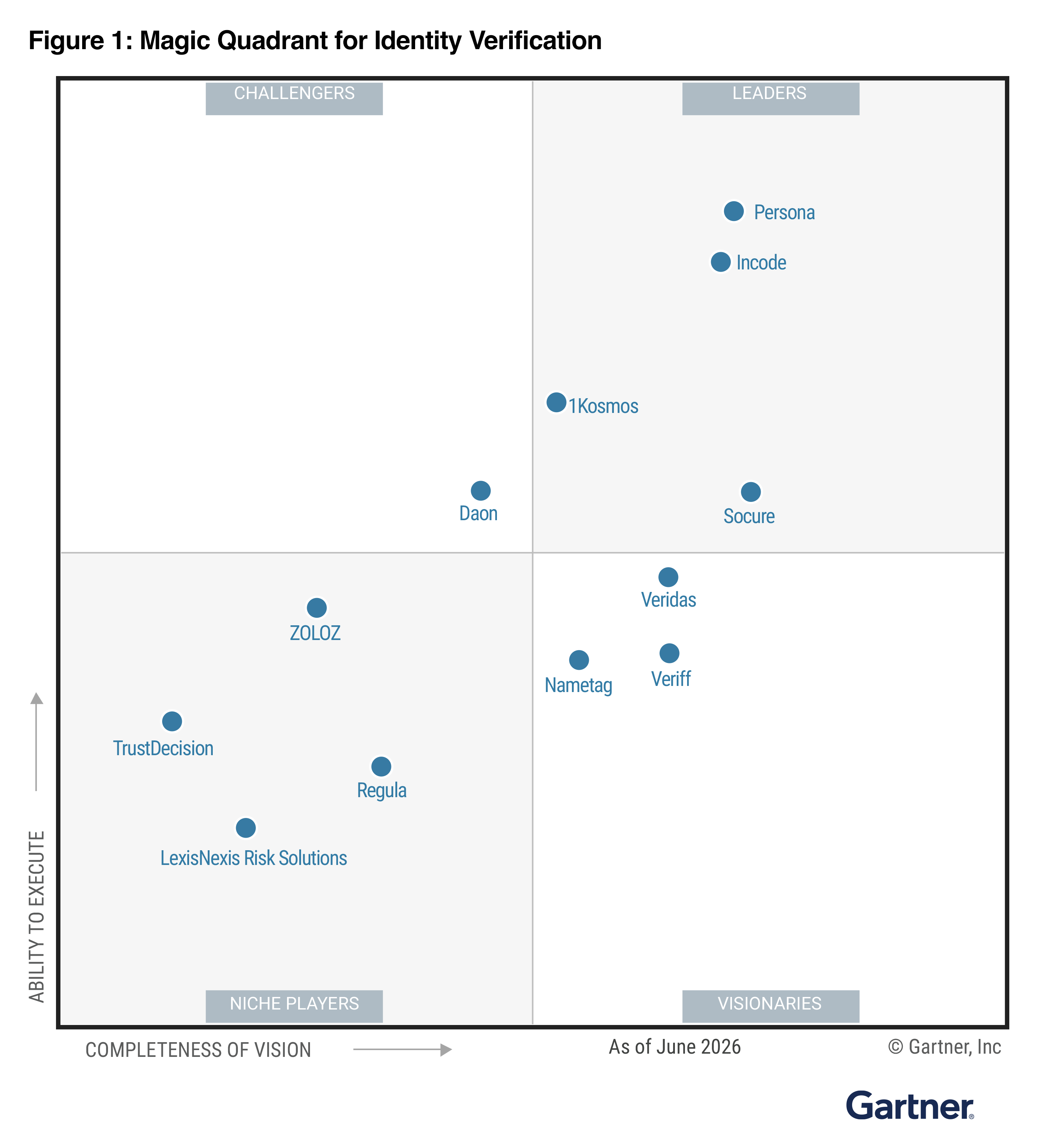
A Leader in the 2026 Gartner® Magic Quadrant™ for Identity Verification
Download the report
3 years in a row named a Leader
A Leader in the 2026 Gartner® Magic Quadrant™ for Identity Verification
Download the report
 Validated under real-world attack scenarios
First to achieve iBeta Level 3 on iOS and Android
Learn more
Validated under real-world attack scenarios
First to achieve iBeta Level 3 on iOS and Android
Learn more
 Introducing GovFaceMatch
The first identity solution to match biometrics against DMV records
Read more
Introducing GovFaceMatch
The first identity solution to match biometrics against DMV records
Read more
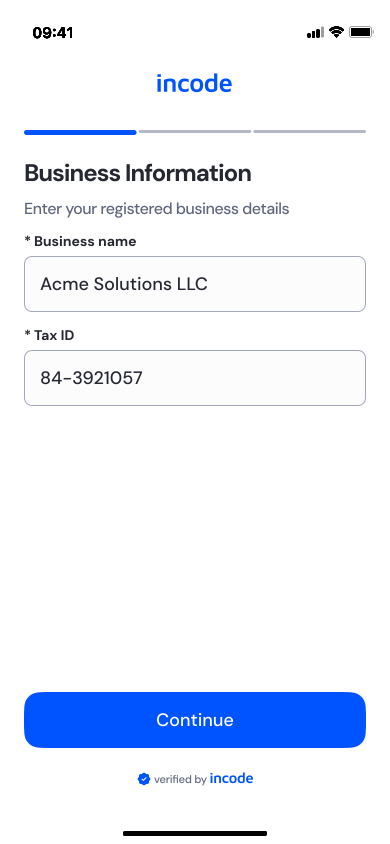
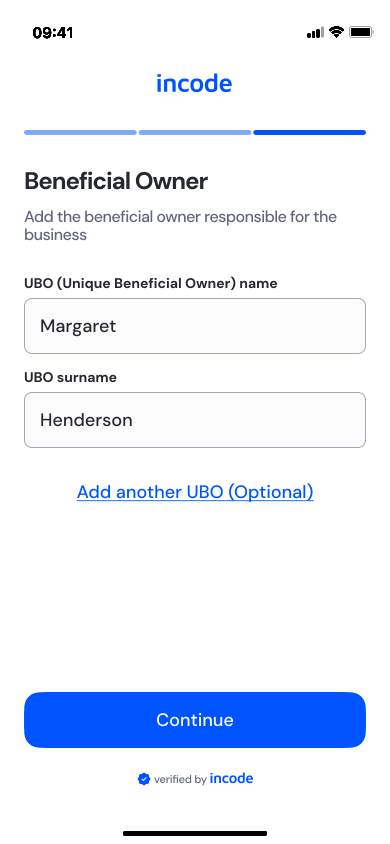
One flow validates the entity, screens sanctions and adverse media, and maps every Ultimate Beneficial Owner, so real businesses onboard in minutes.
of IRS-registered US businesses covered
countries and territories covered
PEP records screened
The problem
Records sit in fragmented registries and ownership hides behind layered entities, so manual review stays slow and still misses the shells it exists to catch.
of global GDP is laundered each year, much of it behind anonymous companies
UNODC
a manual KYB review can take per business, run by hand across fragmented registries
Incode KYB analysis
How it works
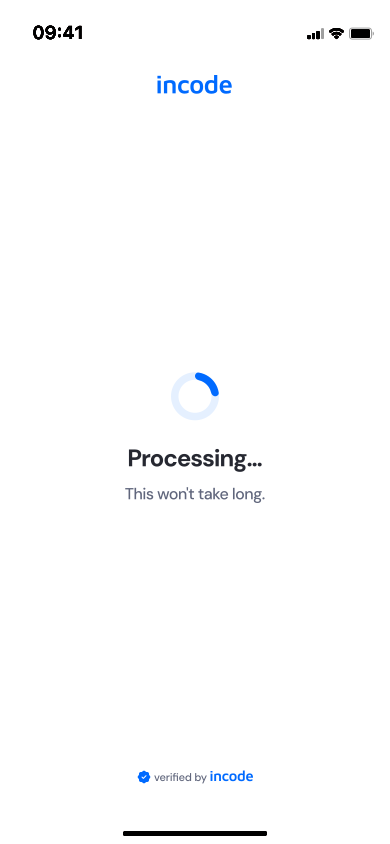
One automated sequence replaces the manual review, from applicant to approved business.
Use cases
Sellers and merchants prove they are real, registered businesses before the first listing goes live.
Accounts and credit decisions start from a validated entity, its registration, and its owners.
Merchant onboarding screens the business and its principals before money starts moving.
Vendors and partners clear entity, sanctions, and ownership checks before contracts are signed.
FAQ
The questions buyers ask most about Know Your Business, answered straight.
Still have questions? Talk to an expertKYB verification confirms that a business is legitimate before you onboard it: validating its tax identifiers, screening it against sanctions watchlists, and identifying the people who ultimately own and control it.
An Ultimate Beneficial Owner is the person who ultimately owns or controls a business, even through layers of holding entities. Regulators require identifying UBOs because sanctioned individuals and money launderers hide behind corporate structures.
By cross-referencing applicants against known shell-company lists and automatically flagging discrepancies in names, addresses, dates, and other key identifiers, the inconsistencies that manual reviewers miss.
KYC verifies an individual customer's identity. KYB verifies a business entity: its registration, its watchlist status, and its owners. The two work together, since every business account ultimately leads to people who also need KYC.
100% of IRS-registered U.S. businesses plus companies across 190+ countries and territories, verified in real time rather than through lengthy manual reviews.
From the blog

Incode candidate identity verification works inside Workday, Greenhouse, Lever, and more. Screen risk, verify IDs and selfies, and get results in your ATS.
Read the post
Fraudulent candidates and suspected nation-state IT workers are already in hiring funnels. Learn the red flags and how to close the verification gap.
Read the post
GovDataMatch now runs on AAMVA DLDV 3.0. See how smarter driver's license verification against state DMV records approves more real users and stops fraud.
Read the post