AI
Our AI moves faster than the attacker
Incode runs its own agentic attacker against its defenses, so every new attack becomes a shipped model the same day.
 Highlights
 Introducing TrustGraph
The first trust network built for the agentic era
Read more
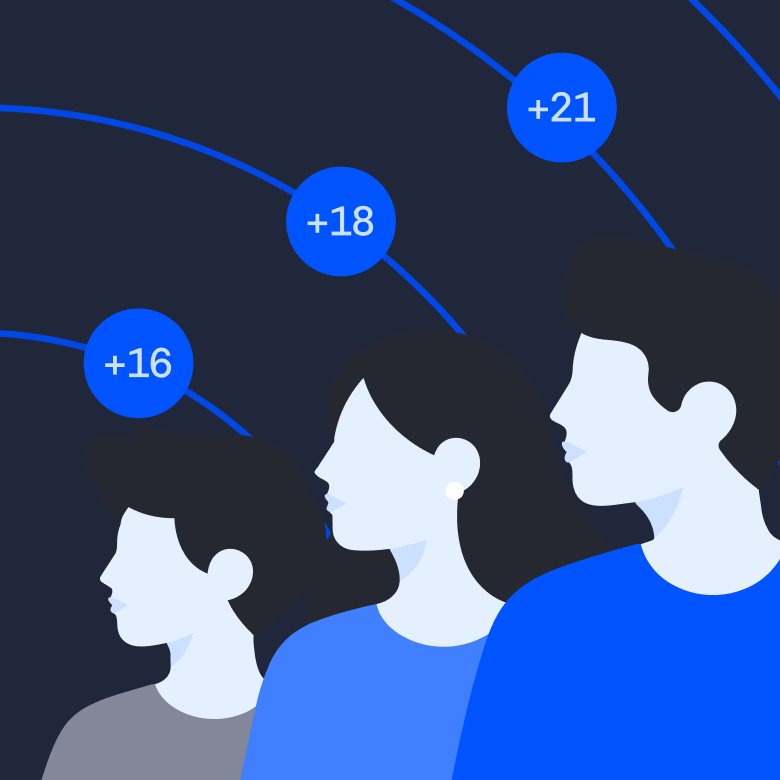 Age Center
Understand Incode’s approach to age assurance
Explore the Center
 Introducing GovFaceMatch
The first identity solution to match biometrics against DMV records
Read more
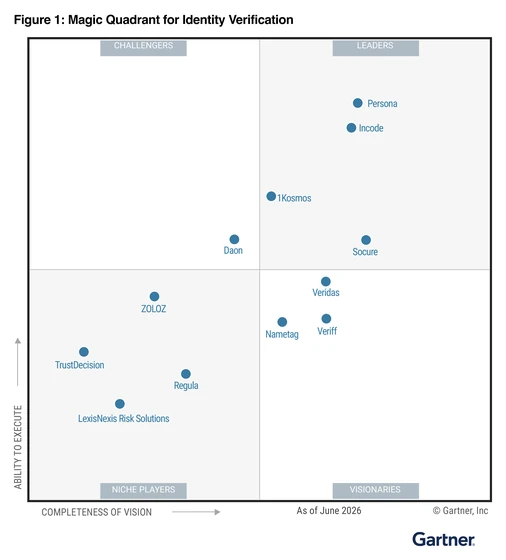 3 years in a row named a Leader
A Leader in the 2026 Gartner® Magic Quadrant™ for Identity Verification
Download the report
Agentic fraud is fraud run by autonomous AI agents, and Incode's own models learn from every attack to stop it across onboarding, login, and recovery.
The challenge
Agentic fraud is already inside onboarding and login flows, running at machine pace against defenses tuned for people.
Rules and vendor models update in weeks, the agent iterates in minutes, and every miss carries a dollar figure.
of fraud attempts expected to be AI-assisted by the end of 2026
Incode
growth in injection attacks in a year, where a forged camera feed is fed straight into the verification flow
Incode
between onboarding attempts in one documented fraud operation
Incode
How it works
Incode has built and retrained every model in-house for 10 years, so updates ship on its own schedule.
Learn more: DeepsightLiveness detectionDocument VerificationTrustGraph
How we fight it
Incode verifies the identity behind every account, turns every failed attack into training data, and retrains its models every day.
AI
Incode runs its own agentic attacker against its defenses, so every new attack becomes a shipped model the same day.
Data
Incode is built where fraud is most sophisticated, so 7.1 billion trust checks can surface a new vector early.
Network
More than 700 enterprises contribute signals, and TrustGraph turns a catch at one company into detection for the rest.
Use cases
Agentic attacks target any flow that decides who gets in, across fintech, banking, crypto, and payments.
Stop synthetic identities and forged documents at account opening, the gate agents probe first.
ExploreAuthenticate the government ID at any gate, including the AI-generated documents agents produce at scale.
ExploreBlock recovery-flow attacks by verifying the human rather than the credential an agent already holds.
ExploreProve a real human is present behind every returning login, without adding friction.
ExploreCatch the synthetic faces and injected camera feeds agents generate at scale.
ExploreScreen for fake candidates and help-desk impersonation as agent-driven attacks reach workforce access.
ExploreTell a customer's agent from an attacker's: bind every AI agent to a verified human and audit its actions.
ExploreMethods
Every check runs on the same in-house stack, from capture to fraud decision, so every layer learns from every attack.
Know Your Human (KYH) proves a real person is present, and Know Your Agent (KYA) binds every agent to one.
Incode's agentic fraud prevention runs inside existing onboarding, login, and recovery flows through platform integrations.
Global enterprises rely on the Incode platform








99.99%
of fraud caught by Deepsight
7.1B+
trust checks run on the Incode platform
400M
identity profiles informing every model
700+
enterprises contributing fraud signals
What customers say
“How do you expect every single business to keep up with deepfakes, synthetic identities, and romance scams on its own? It is impossible. That is why we chose Incode, which has the strongest solution in the market today.”
Navjeet Grewal · Managing Director, Verification and Digital Credentials, Interac
Agentic fraud is a class of identity fraud in which an autonomous AI agent, rather than a human operator, executes the full attack workflow: it finds targets, generates fake documents or media, submits them, observes how the system responds, and adapts and retries at scale without human involvement. Its defining feature is this adaptive feedback loop.
Incode runs every attempt through in-house liveness, Deepsight deepfake detection, document forensics, and face match, retrains its models every day, and shares each catch across more than 700 enterprises through TrustGraph.
No: Incode's agentic fraud prevention runs inside existing onboarding, login, and recovery flows through platform integrations, and deploys in SaaS, private cloud, or bare metal.
More than 700 enterprises contribute fraud signals, and TrustGraph turns an attack caught at one company into detection for the rest, so a synthetic identity burned at one company can be caught at the next.
Know Your Human (KYH) proves a real, live person is present at each gate, and Know Your Agent (KYA) binds every AI agent to that verified person, so an autonomous attacker must pass both.
Incode tests each layer against public benchmarks: 0% error across three iBeta PAD levels, a 0.2% deepfake false-accept rate against 13.7% for the next best system, top-tier NIST results since 2018, and zero pentesting bypasses.
The Incode platform deploys in SaaS, private cloud, or bare metal, runs at more than 99.99% reliability, and supports enterprise-level security and compliance, so regulated environments can keep verification inside their own infrastructure.
Incode retrains from as few as 10 samples: a new attack pattern becomes training data the moment it appears, the update ships the same day, and Incode's own agentic attacker tests the defense continuously.
What's next
Request a demo and walk through the benchmarks, the pentesting record, and the daily retrain loop.