




Workforce Identity in 2026: What Attackers Will Exploit Next
As organizations enter 2026, attackers are not abandoning the tactics of the past. They’re enhancing them with AI. The fraud patterns driving the most damage today combine familiar social engineering with synthetic media, compromised credentials, and large-scale automation, creating a threat environment that many workforce identity programs weren’t designed to address.
Drawing on threat intelligence, Incode’s own detection data, and broader industry reporting, this piece outlines the workforce identity risks that security and identity teams should be prioritizing as they plan for the year ahead.
The AI-Augmented Social Engineering Problem
Social engineering has always been the highest-leverage attack vector against human targets. In 2026, that leverage has increased significantly.
Generative AI tools now make it possible to produce highly convincing voice clones, deepfake video, and personalized phishing content at scale, without specialized skills or significant resources. Attackers are using these capabilities to impersonate executives in business email compromise (BEC) schemes, to fabricate urgent authorization requests in real-time communications, and to defeat knowledge-based verification controls.
The organizational risk isn’t just financial fraud. These techniques are increasingly used to manipulate IT and helpdesk personnel into resetting credentials, bypassing MFA, or provisioning unauthorized access, often using a combination of social pressure and identity-adjacent deception.
The Synthetic Worker Problem
Synthetic employee fraud has moved from an edge case to a documented operational risk. The attack pattern typically involves fabricating a complete professional identity, including a manufactured work history, AI-generated photo, and supporting documentation, and submitting it through normal hiring processes.
Once placed, synthetic employees may conduct data exfiltration, establish persistence for future access, or serve as insider threats for external actors. The challenge is that many of the identity verification checkpoints in typical hiring workflows were designed for compliance, not for detecting adversarial fabrication at the document and biometric level.
Detection requires document-level forensic validation, biometric liveness checks, and cross-referencing that goes beyond what most background check vendors provide.
The Remote Access Attack Surface
Distributed workforce models have permanently expanded the authentication perimeter. The controls that worked for in-person or on-premises environments, badge readers, witnessed ID checks, supervised onboarding, don’t translate directly to remote contexts.
Attackers have adapted to this. Account takeover targeting remote employees is increasingly common, particularly in roles with elevated system access. MFA fatigue attacks, where attackers flood users with authentication prompts until a tired user approves one, have become a routine technique rather than a novelty.
Session hijacking, credential stuffing against VPN and SSO endpoints, and adversary-in-the-middle phishing kits capable of capturing session tokens are all in active use against workforce targets.
The Insider Risk Dimension
Not all workforce identity risk comes from external actors. Insider threats, whether intentional or inadvertent, remain a significant contributor to enterprise breaches. The challenge is that behavioral signals for insider risk are often ambiguous until after the fact.
From an identity infrastructure standpoint, the relevant control is continuous authentication: ensuring that the person who authenticated at login is the same person performing sensitive actions later in the session. Point-in-time authentication at the perimeter doesn’t address privileged insiders or compromised accounts operating within their normal access scope.
The Privileged Access Gap
Many workforce identity programs have a meaningful gap at the privileged access layer. IT administrators, engineers, and executives often have elevated permissions that bypass standard authentication controls, either by exception policy or by legacy design.
This creates asymmetric risk: the accounts most capable of causing organizational damage are often the least consistently secured. Privileged access management (PAM) alone doesn’t address this if the underlying identity assurance for privileged users is weak.
What Security Teams Should Be Evaluating
Given these threat patterns, the most productive areas for identity and security teams to assess include:
Hiring and onboarding controls
Whether current document verification and biometric checks are designed to detect adversarial fabrication, not just confirm format compliance.
MFA resilience
Whether existing MFA implementations are vulnerable to fatigue attacks or phishing-resistant alternatives should be evaluated for high-risk roles.
Privileged access authentication
Whether privileged accounts are subject to stronger identity assurance than standard user accounts, particularly for remote access and sensitive system interactions.
Continuous session authentication
Whether authentication is a point-in-time check at login or an ongoing control throughout privileged sessions.
Identity verification for verification requests
Whether IT and helpdesk procedures for credential resets and access changes include identity verification steps that can’t be defeated by voice cloning or deepfake video.
Looking Ahead
The workforce identity threat landscape in 2026 is defined by the intersection of accessible AI tools and persistent human vulnerabilities. Organizations that are adjusting their identity programs to account for AI-augmented attacks, synthetic identities, and the remote access gap will be better positioned to limit both the frequency and impact of workforce-related breaches.
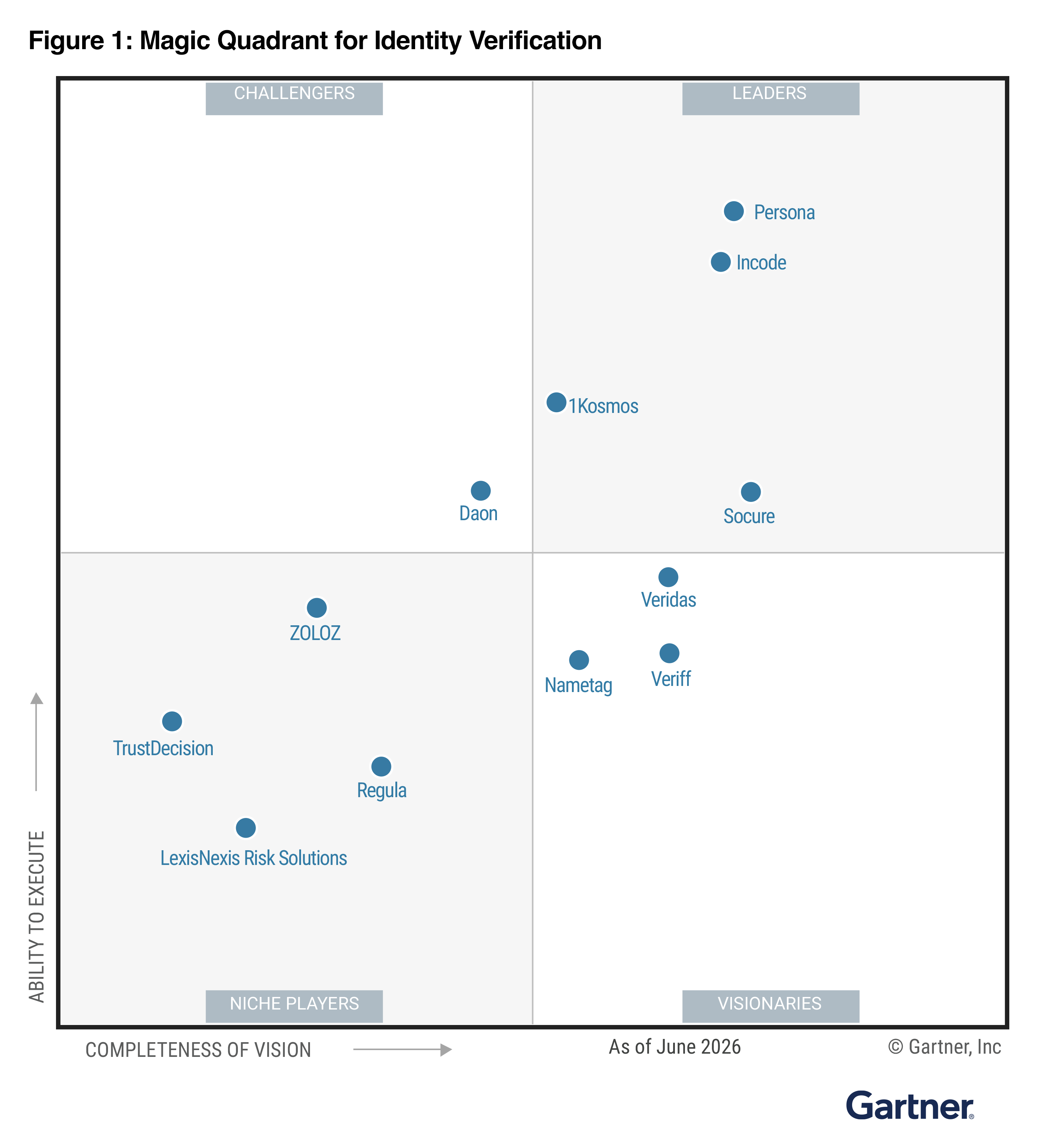
Incode was named a Leader in the 2025 Gartner® Magic Quadrant™ for Identity Verification. Download the report.