




What Is Digital Identity Verification?
A streamlined digital identity verification strategy protects organizations from fraud while enabling fast, seamless digital experiences.
The success of modern digital businesses depends on how well they verify identity remotely. As onboarding, transactions, and other high-risk interactions move online, the cost of getting identity wrong continues to rise. Identity fraud, account takeovers, and synthetic identities now scale faster than traditional controls were designed to handle.
Regulators and enterprises have responded by treating identity verification as a frontline defense. Across financial services, marketplaces, and regulated digital platforms, identity checks are no longer optional. They are expected, audited, and enforced.
Organizations that adopt modern digital identity verification systems can reduce fraud exposure, meet regulatory expectations, and protect user trust.
What Is Digital ID Verification?
Digital identity verification is an online process that confirms a person's identity remotely, replacing manual paper checks with fast, secure, and automated technology. It confirms that individuals are who they claim to be, helping businesses and governments prevent fraud.
Unlike traditional in-person methods, digital ID verification is built for remote, real-time environments. It enables organizations to verify users securely at scale, anywhere in the world, while maintaining high assurance standards.
It answers three essential questions:
- Is this a real person?
- Does this identity belong to them?
- Can this interaction be trusted right now?
Why It Matters: The Cost of Getting It Wrong
Without a robust identity verification service, businesses face:
- Identity fraud and impersonation
- Synthetic and AI-generated identities
- Account takeovers and abuse
- Regulatory penalties and reputational damage
- Higher operational costs from manual review
But overly rigid verification creates its own problems: friction, abandonment, and lost revenue. Effective digital ID verification balances protection with usability.
How Digital ID Verification Works
Modern digital identity verification relies on layered defenses rather than a single check. Each layer increases confidence while reducing exposure to fraud.
This technology uses a combination of data points to verify identity, including:
Identity Document Verification
The process often begins by capturing a government-issued ID such as a passport, driver's license, or national ID. AI-powered systems then analyze:
- Document authenticity and security features
- Signs of tampering or manipulation
- Format and data consistency
- Country- and document-specific rules
Identity Document verification establishes a trusted identity anchor, but it is only the first step.
Biometric Verification
Biometrics confirm that the person presenting the document is physically present and matches the identity. Common checks include:
- Facial recognition
- Selfie-to-ID matching
- Biometric similarity scoring
Biometrics reduce impersonation risk and eliminate reliance on knowledge-based questions that are easily compromised.
Liveness Detection and Deepfake Defense
As fraudsters use AI-generated images, videos, and injection attacks, liveness detection has become critical. Modern systems determine whether the interaction involves a real human by analyzing:
- Motion and depth cues
- Lighting and camera behavior
- Environmental consistency
- Signs of replay or synthetic media
This protects against presentation attacks, deepfakes, and real-time face reenactment.
Database Checks
Leading identity verification platforms cross-reference provided information against trusted databases, such as credit bureaus and government records. This adds an additional layer of confidence beyond document and biometric checks, helping detect synthetic identities and flag inconsistencies that visual checks might miss.
Digital Data Analysis
Leading platforms also extend beyond documents and biometrics by incorporating contextual intelligence. Signals include:
- Device integrity and fingerprinting
- Network and IP behavior
- Geolocation consistency
- Historical fraud patterns
Analyzing these signals continuously allows organizations to stop sophisticated attacks without adding friction for legitimate users.
Digital ID Verification vs. Traditional KYC
Traditional KYC processes were built for slower, manual workflows that often involved paperwork, branch visits, and post-event reviews. Digital identity verification modernizes KYC by making it:
- Real-time instead of batch-based
- Automated instead of manual
- Risk-based instead of static
- Scalable across regions and volumes
Rather than treating identity as a one-time checkpoint, digital verification supports continuous trust throughout the customer lifecycle.
Key Use Cases for Digital Identity Verification
Digital ID verification is used wherever trust, safety, and compliance are critical.
Remote Onboarding
Enables instant, safe, and automated user onboarding for financial services, fintechs, and other regulated industries. Identity verification platforms make it possible to onboard customers in seconds rather than days.
Fraud Prevention
Reduces identity fraud, including spoofing and synthetic identities. Digital identity verification stops bad actors before they reach your systems, rather than after damage is done.
Compliance
Ensures compliance with Know Your Customer (KYC) and Anti-Money Laundering (AML) regulations. Identity verification providers help organizations maintain audit-ready records and meet regional requirements without adding manual overhead.
Secure Access
Provides safe, frictionless access to digital platforms and services, from banking apps to government portals.
Digital Wallets
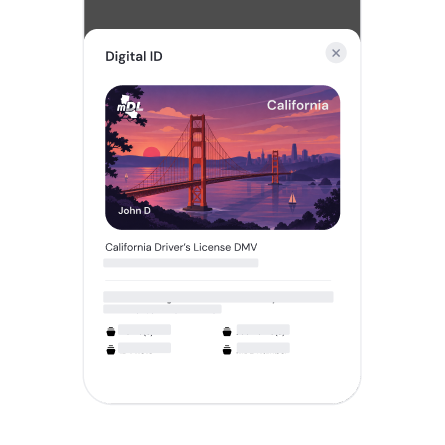
Enables the storage and use of digital IDs on smartphones, making it easy for users to prove age or residency without physical documents.
Age-Restricted Services
Age assurance and eligibility checks protect minors and ensure compliance with regional regulations.
The Role of Fraud Intelligence in Digital ID Verification
As fraud evolves, identity verification must become adaptive. Incode's Deepsight fraud intelligence layer strengthens digital identity verification by analyzing behavioral, device, and network signals alongside biometric and document checks. This allows organizations to detect anomalies early, before fraud reaches onboarding or transaction stages.
By embedding fraud intelligence directly into the verification flow, organizations can:
- Block synthetic and AI-driven identities
- Reduce false positives
- Maintain high conversion rates
- Adapt defenses as attack patterns change
Why Digital ID Verification Is Becoming Mandatory
Regulatory expectations are rising globally, while users expect speed and simplicity. Digital identity verification helps organizations:
- Meet KYC, AML, and age verification requirements
- Reduce fraud and compliance risk
- Deliver fast, intuitive user experiences
- Maintain audit-ready identity records
In a digital-first environment, trust must be established, verified, and continuously maintained.
The Future of Digital Identity Verification
As digital interactions scale, identity verification becomes more complex and more costly to get wrong. One-time checks are no longer sufficient, and manual reviews cannot keep pace with AI-driven fraud, evolving regulations, and rising expectations.
Leading companies are moving toward unified identity verification platforms that combine verification, fraud intelligence, and continuous risk assessment within a single system. By integrating document verification, biometrics, liveness detection, and real-time fraud signals, these platforms establish trust once and maintain it over time as risk changes.
Digital identity verification is no longer a future investment. It is the foundation of secure, compliant growth in the digital economy.
Ready to see it in action? Explore Incode's identity verification solutions.