





How Attackers Are Bypassing Identity Verification in the Age of Generative AI
Identity verification (IDV) followed a familiar playbook for years: check an ID, match a face, confirm liveness, move on. That model worked when fraud relied on static forgeries, replay attacks, or human impersonation at a limited scale.
But generative AI has changed the equation.
Today’s attackers can simulate identity to a much more convincing degree, and, thanks to AI, they’re able to do so at scale. Modern fraudsters adapt in real time, coordinate across modalities, and exploit gaps between isolated verification checks, all at a fraction of the cost compared to just one decade ago.
Security, fraud, and product leaders must understand how these attacks work if they want to continue protecting their consumers’ digital trust. Below are five of the most impactful techniques redefining identity fraud in the AI era.
1. AI-Enhanced Presentation Attacks
In a traditional presentation attack, fraudsters displayed static photos, replayed existing videos, and used screen captures to simulate identity. But Generative AI has significantly upgraded presentation attacks, making them far more complex for humans and systems to spot.
Attackers now use AI to introduce realistic camera noise, lighting shifts, motion blur, depth cues, and micro-movements that closely resemble genuine capture conditions. These enhancements defeat basic liveness checks that rely on static thresholds or simple motion prompts.
2. Real-Time Face Reenactment During Liveness Checks
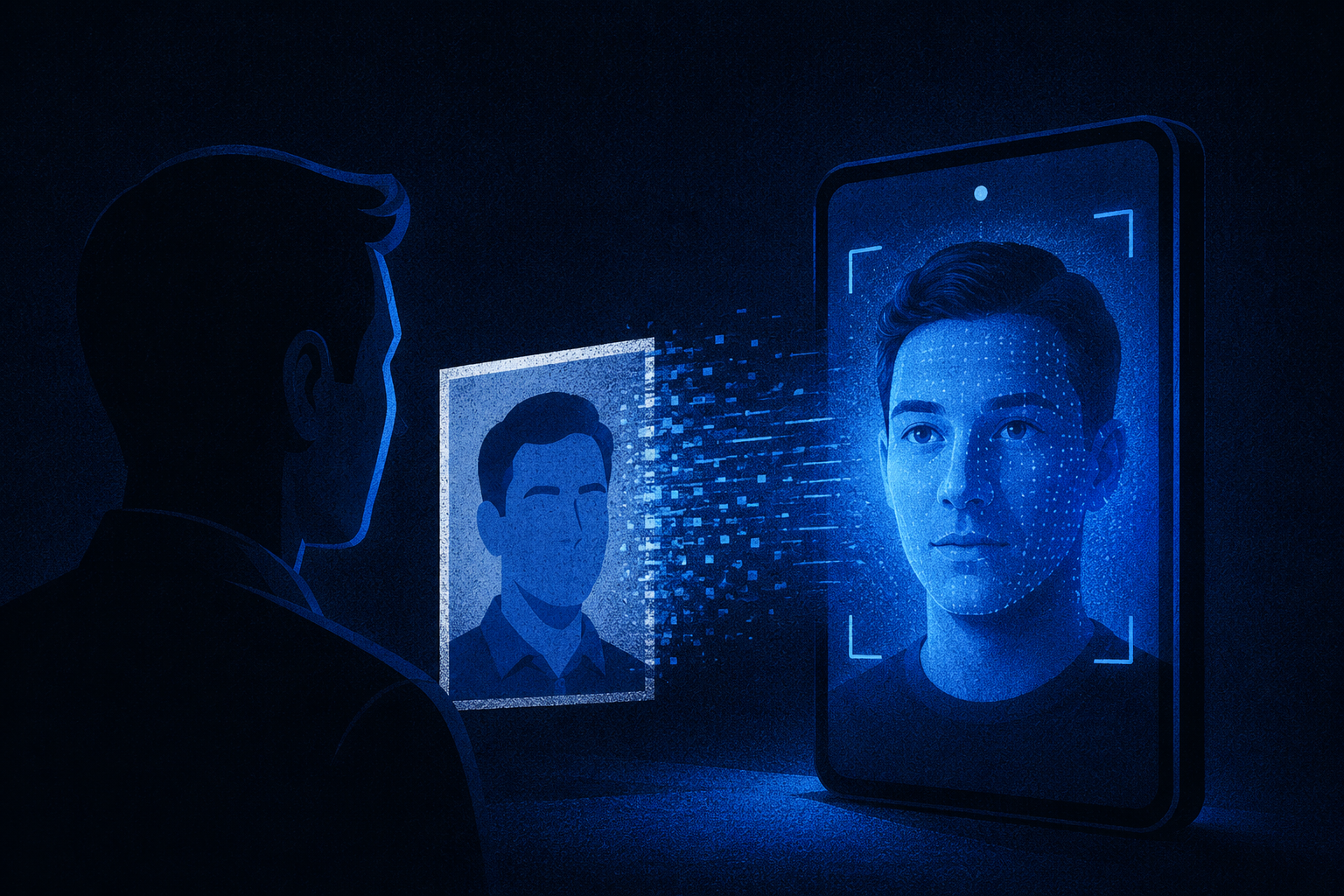
Instead of submitting pre-recorded media, fraudsters now animate synthetic or stolen faces live during selfie and liveness flows. This has become one of the most concerning evolutions in modern fraud.
Using generative models, attackers can adapt facial expressions, head movement, eye direction, and timing on the fly—responding dynamically to prompts meant to prove a human is present. This allows attackers to pass checks that rely on “unpredictability” alone as sufficient defense. Ironically, it’s becoming increasingly easy to simulate unpredictability with AI.
In fact, real-time face reenactment fraud often fools human reviewers, too. Research from the journal Cognitive Research: Principles and Implications discovered that humans can only spot deepfake faces in images about 50% of the time.
3. Multimodal Identity Spoofing
Modern attacks rarely rely on a single signal. Instead, fraudsters coordinate AI-generated video, cloned voice, and fabricated or altered documents to present a consistent identity across biometric and non-biometric checks.
A synthetic face matches a synthetic ID. A cloned voice reinforces the same persona in a call center or video interview. Each element supports the others, reducing friction and suspicion. When verification systems evaluate signals in isolation, this coherence becomes a powerful advantage for attackers.
4. Device and Environment Manipulation
Beyond faces and documents, attackers are targeting the capture environment itself. Emulators, virtual cameras, injected video streams, and manipulated device fingerprints allow fraudsters to control what verification systems “see.”
These techniques bypass defenses that assume camera input is trustworthy or that device integrity checks are secondary. Once the capture pipeline is compromised, even strong biometric models are operating on poisoned inputs.
Stopping this class of attack requires visibility before and during capture—not just analysis after submission.
5. Scaling Fraud Through Automation
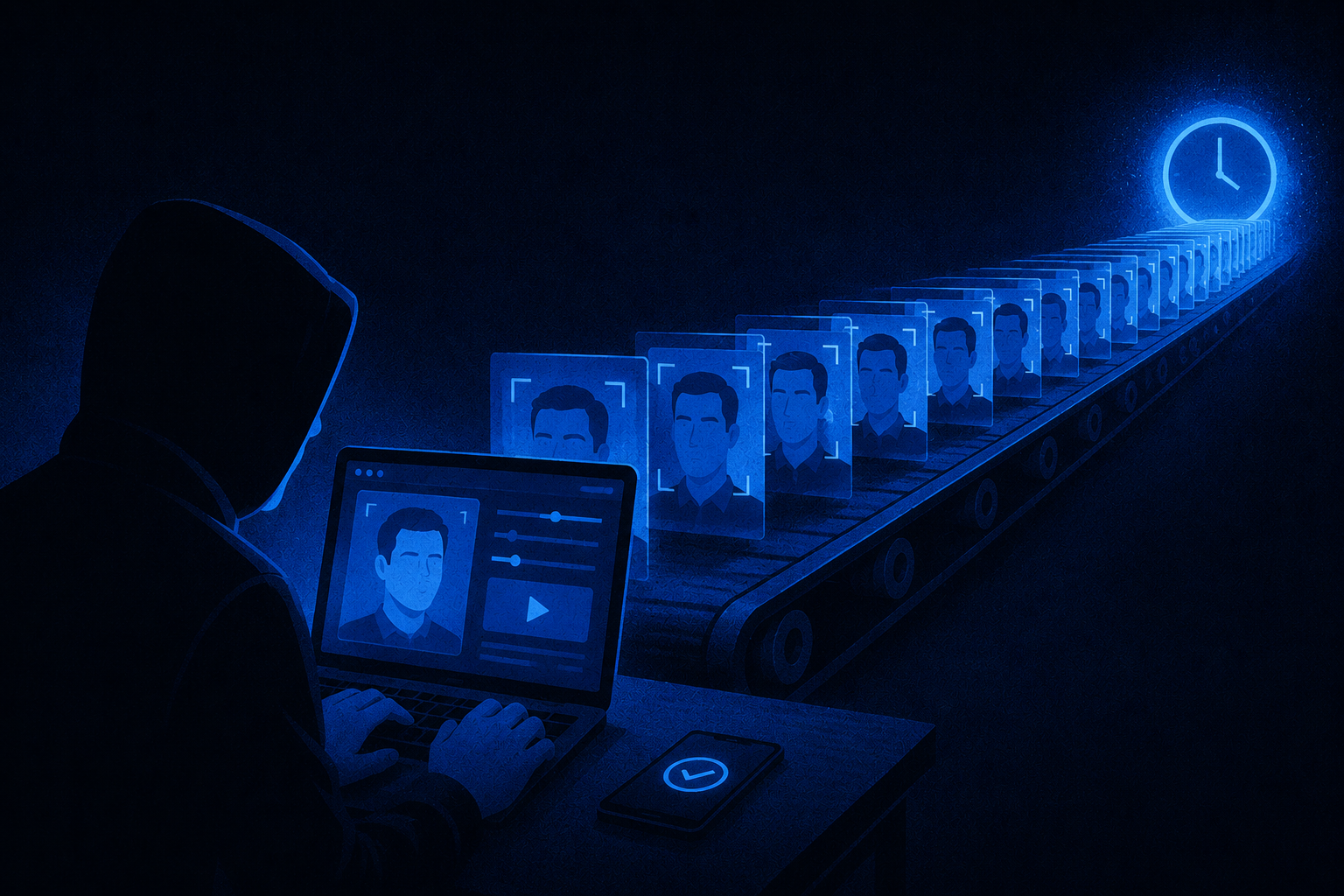
Perhaps the most dangerous shift is scale. What once required expertise and manual effort can now be automated. Attackers iterate quickly, test defenses, and refine techniques using consumer-grade tools, often in just hours or even minutes.
This creates an asymmetry: organizations rely on static rules and point-in-time checks for defense, while attackers adapt continuously. The result is a widening gap between traditional IDV defenses and modern fraud capabilities.
Why Traditional IDV Alone Is No Longer Enough
These emerging, AI-enabled techniques aren’t succeeding because IDV is broken. They’re succeeding because identity verification was never designed to operate in isolation against adaptive, AI-driven adversaries.
Effective defense now requires correlating biometric signals with behavioral patterns, device integrity, network indicators, and contextual risk, before fraud reaches the final decision point.
This is where layered intelligence becomes critical.
Incode’s Deepsight layer analyzes behavioral, device, and network signals alongside biometric verification to detect AI-driven attacks earlier in the flow. By identifying anomalies before capture or during interaction, it reduces reliance on any single signal and limits attackers’ ability to probe and adapt.
Understanding the Threat Is the First Line of Defense
The goal is not to fear generative AI, but to recognize how it is reshaping attacker behavior. Fraud in the AI era is adaptive, multimodal, and increasingly automated. Defending against it requires the same qualities: continuous analysis, layered signals, and a deep understanding of how attacks evolve.
Interested in learning more about how to combat modern fraud with multi-layered IDV intelligence? Book a Deepsight demo today.