Un año en la primera línea del fraude Deepfake: Lo que estamos aportando al dinero 20/20
.jpg)
Fernanda Sottil
June 1, 2026•
June 1, 2026•
En 2026, la identidad dejó de ser un punto de control por el que pasas. Se convirtió en la capa de responsabilidad detrás de casi todas las interacciones significativas. La pregunta ya no es “¿puede entrar esta persona?” sino más bien, “¿qué se le permite hacer a esta entidad, y quién es el responsable cuando las cosas van mal?”
Ese cambio está sucediendo exactamente en este momento. El fraude deepfake se ha vuelto industrial. El Foro Económico Mundial grabado más de $200 millones en pérdidas por fraude relacionadas con deepfake solo en el primer trimestre de 2025. Deloitte estima que el fraude impulsado por la IA en Estados Unidos podría acercarse $40 mil millones para 2027. Los atacantes ahora pueden generar decenas de miles de identidades sintéticas en tiempo real, y las empresas siguen poniéndose al día. Después de un año récord de escalada de deepfake, es imperativo que los bancos nivelen sus defensas contra el fraude en 2026 y más allá.
Esa es la conversación a la que me uniré en Money 20/20 Europa como ponente en el panel Luchando contra los Deepfakes: El año de un banco en primera línea. Y honestamente, no puedo esperar.
Estoy realmente entusiasmado con esta alineación, porque todos aportan una perspectiva que rara vez se llega a escuchar uno al lado del otro.
Tomas Rubens, Managing Partner de DN Capital**, moderará. Thomas codirige el equipo del sector de software de DN y ha respaldado a empresas que definen categorías, desde Seed hasta IPO, incluidas Auto1, HomeToGo, Yassir e Incode, donde dirigió nuestra Serie A y se desempeña como miembro de la junta. Ha visto qué apuestas de identidad realmente dan sus frutos, y cuáles se ven muy bien en un pitch deck pero colapsan en producción.
Ahron Geminder, Jefe de Producto B2B en Vanguard Asset Management**, aporta la visión del constructor. Antes de Vanguard, Ahron gastó ocho años en HSBC construyendo la plataforma global de identidad digital del banco. Si quieres saber lo que realmente se necesita para enviar una infraestructura de identidad a la escala de un banco global, Ahron tiene las cicatrices y las lecciones.
Moderador, inversionista y operador en el mismo escenario. Tres ángulos en el mismo problema difícil.
Los deepfakes generalmente se enmarcan como un problema mediático: una cara falsa, una voz falsa, un video manipulado. El impacto real es estructural. Cuando se puede generar una cara, una voz y una historia bajo demanda, parecer legítimo se convierte en una mercancía, y cada sistema de identidad construido sobre un cheque único en la puerta comienza a romperse.
Hace un año, la industria seguía debatiendo si los deepfakes escalarían. Ellos tienen. El fraude ha pasado de la reutilización de la identidad a la fabricación de identidades a escala industrial. ¿La parte incómoda? Gran parte de este fraude ni siquiera se cuenta como fraude. Se categoriza como actividad normal del cliente y solo se presenta meses después como recargos, actividad de mulas o adquisición de cuentas.
Como Ricardo Amper, Fundador y CEO de Incode, ha escrito, el verdadero desafío es detener el fraude sin estrangular la experiencia legítima del cliente que impulsa el negocio.
La sesión recorre el problema en cuatro partes, impulsadas por preguntas que la industria aún no ha respondido completamente:
Esta sesión está diseñada para clientes potenciales de fraude, operaciones AML y KYC, oficiales de cumplimiento de normas, CISO, líderes de IAM, arquitectos de seguridad y equipos de confianza y seguridad. Si eres dueño de alguna parte de cómo tu organización decide quién, o qué, va a actuar, esta conversación es para ti.
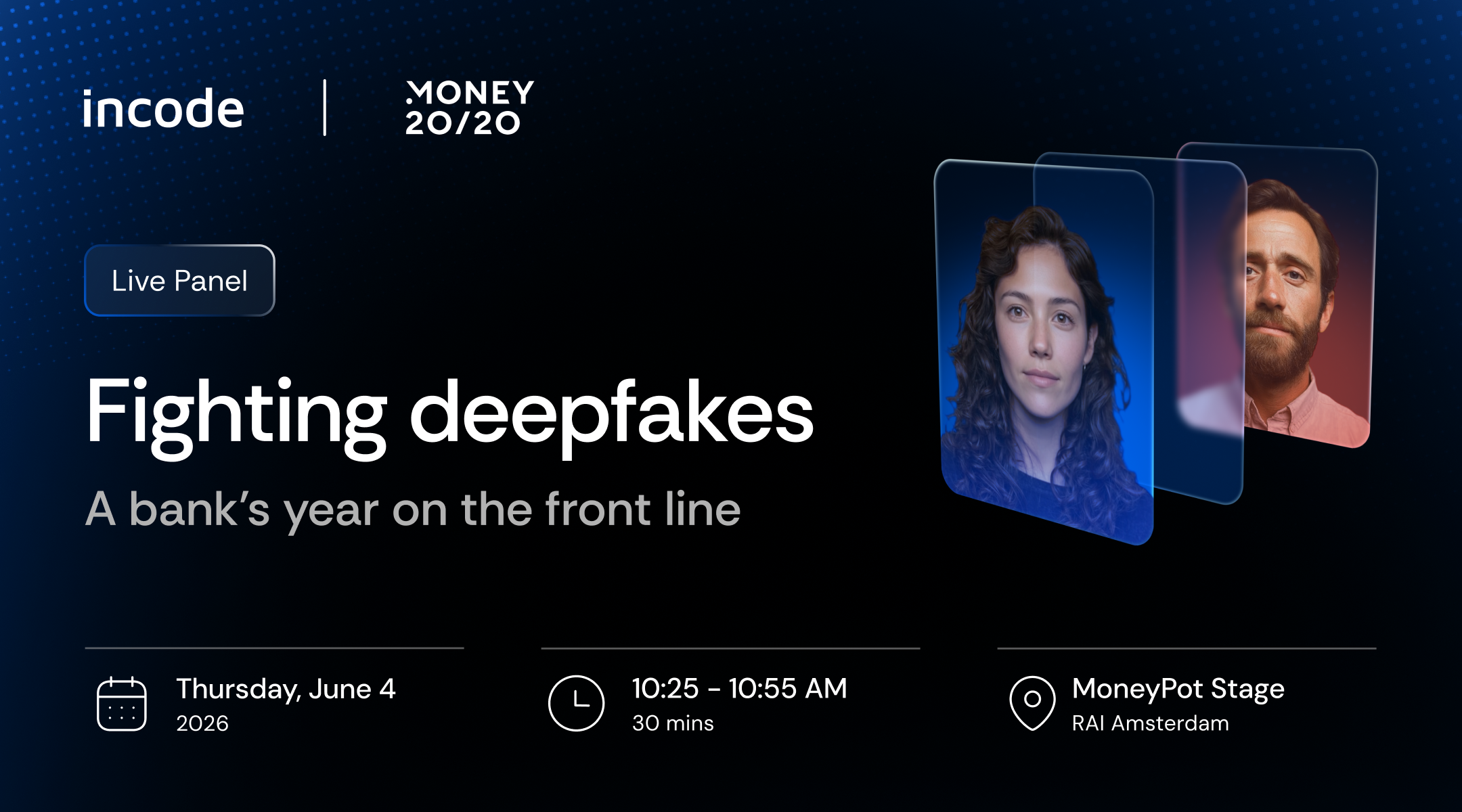
Luchando contra los Deepfakes: El año de un banco en primera línea
🗓 Jueves, 4 de junio, 10:25 — 10:55 (30 minutos)
📍 MoneyPot Stage, La RAI, Ámsterdam
🎟 Inside Money 20/20 Europa
Ven a escuchar lo que un año en primera línea realmente nos enseñó. Y si estás en el evento, ven a saludar al equipo de Incode. Me encantaría conocerte.
%20(1).avif)