


Incode Acquires Identiq, Commits $100M to Privacy-First Identity Tech
In this article, SiliconANGLE reports on Incode's acquisition of Identiq Protocol Ltd., an Israeli startup whose cryptographic tools let companies share fraud signals without sharing the underlying customer data. Incode is positioning the deal as the centerpiece of a $100 million commitment to privacy-preserving identity infrastructure. The funding will support more on-device processing, deeper research into privacy-enhancing technology, and engineering hires across Incode's offices.
Read the transcript from SiliconANGLE, published on June 25, 2026.
Incode acquires Identiq, commits $100M to privacy-first identity tech
by Duncan Riley
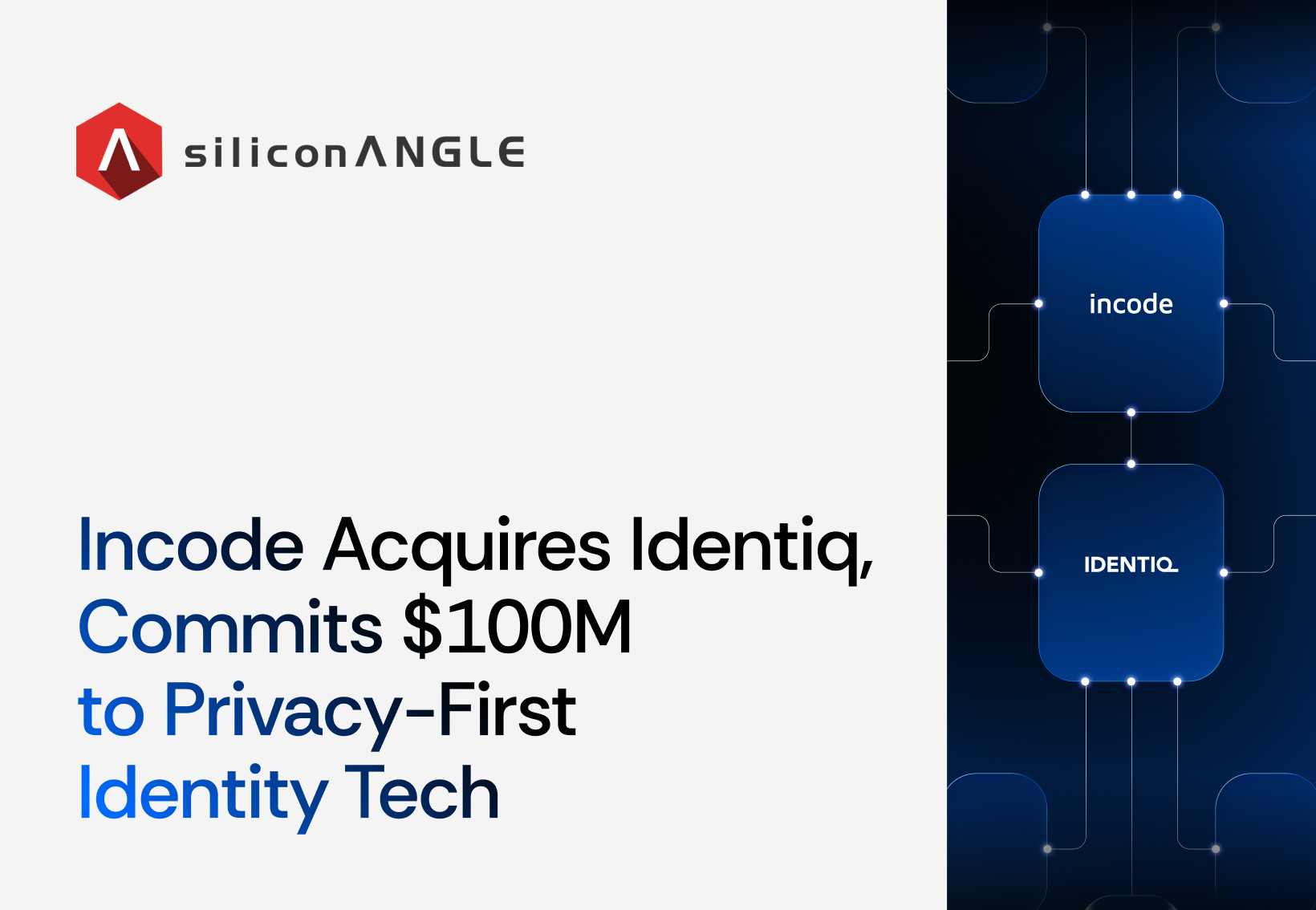
Identity verification company Incode Technologies Inc. today announced that it has acquired Identiq Protocol Ltd., an Israeli startup that builds cryptographic tools letting companies share fraud signals without sharing the underlying customer data.
Incode is treating the deal as the centerpiece of a $100 million bet on privacy-preserving identity infrastructure. It did not disclose what it paid for Identiq.
The $100 million will fund more on-device processing, deeper research into privacy-enhancing technology and a wave of engineering hires across its offices, the company said. That spending tracks an argument Incode has pushed since it was founded in 2015, which is that fraud prevention works better when a company holds less user data rather than more.
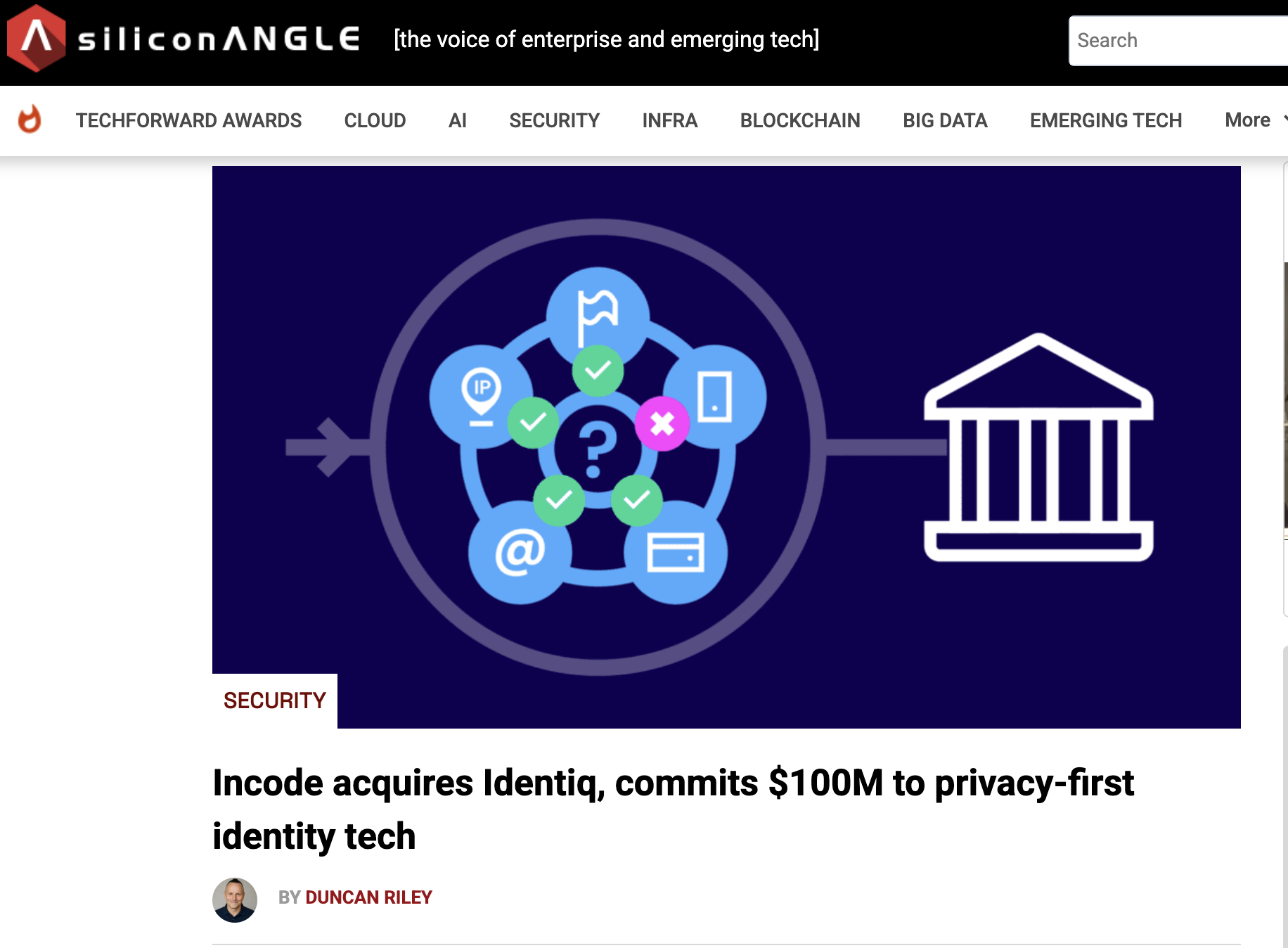
Identiq’s technology addresses a long-standing problem in anti-fraud work. Institutions that want to spot repeat fraudsters across a network have traditionally had to pool customer data into shared databases, creating exactly the kind of central data store that attracts breaches. Identiq’s approach lets organizations confirm whether another institution has seen a given identity before without either side exposing customer records. No central data lake, no data brokerage.
The company spent close to a decade and more than $50 million developing the patented method. Incode said the technology, once integrated, will run across billions of verifications a year.
“Every institution shared the same concern with us: how do we fight fraud together without giving up control of our customers’ data,” said Identiq co-founder and Chief Executive Itay Levy. “Identiq built the answer to that very question.”
Incode tied the acquisition to two other design choices it says reduce the data it holds. The company’s verification flow runs through proprietary artificial intelligence rather than human reviewers, removing a common breach vector. And for sensitive checks such as age verification, its newer models run biometric processing on the user’s own device, so personal data does not leave the user’s environment.
“We have always believed that privacy and fraud prevention are not a tradeoff, but part of the same problem, solved together or not at all,” said Incode founder and CEO Ricardo Amper.
The pitch comes against a worsening breach backdrop. Breaches tied to third-party vendors are climbing and figured in 30% of the 3,322 U.S. data compromises the Identity Theft Resource Center logged last year, a record total and double the share of five years earlier.
Incode said it carries the main security and privacy certifications its banking and government customers look for, among them SOC 2 Type 2, ISO/IEC 27001, FedRAMP Moderate and the Kantara IAL2 trust mark.
The acquisition is Incode’s third in two years. The company bought identity verification rival MetaMap Inc. in 2024 and AuthenticID in 2025.
More about SiliconANGLE
[DRAFT, NEEDS VETTING] SiliconANGLE is a technology news publication owned by SiliconANGLE Media Inc. and founded by John Furrier and Dave Vellante. It covers enterprise and emerging technology, including AI, security, cloud, and infrastructure.
Read the original article here.