





Ricardo Amper on the Growing Fraud Threat Behind Fake Job Ads
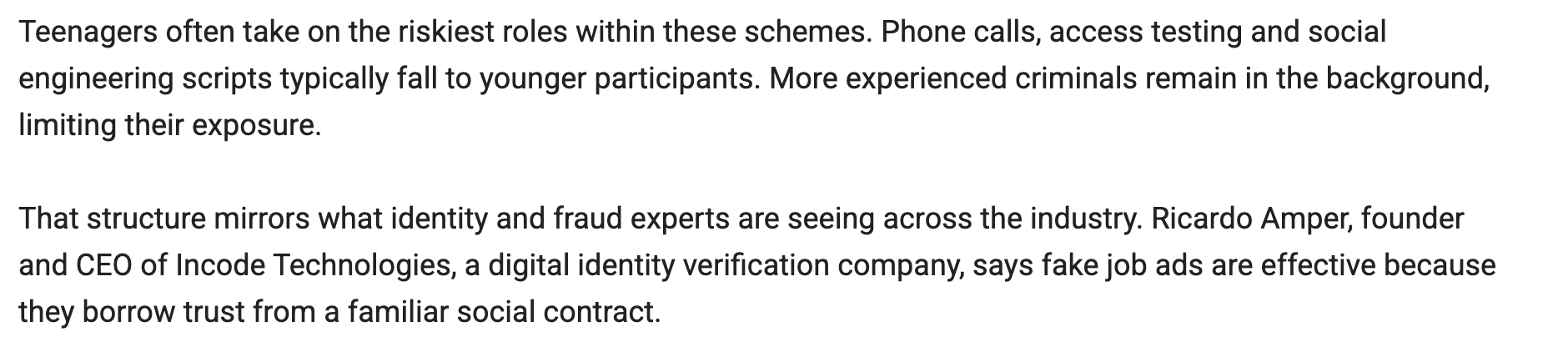
Incode CEO Ricardo Amper was interviewed by Fox Business about the growing use of fake job advertisements as a vector for recruiting teenagers into cybercrime networks. The piece highlighted the intersection of social engineering, youth recruitment, and identity fraud that has emerged as a significant concern for law enforcement and security researchers.
The interview was prompted by reporting on criminal networks that post fraudulent job listings on social media platforms targeting teenagers and young adults. These listings offer easy money for tasks that turn out to involve accessing stolen financial accounts, reshipping fraudulently purchased goods, or providing personal information for use in fraud schemes.

Amper discussed how identity fraud infrastructure enables these schemes. Synthetic identities, stolen credentials, and AI-generated documents allow bad actors to create convincing fraud pipelines that can be operated by individuals with minimal technical expertise, including teenagers who don’t fully understand the legal exposure of their participation.
He also noted the role that platform identity verification gaps play in enabling these recruitment efforts. When social media platforms cannot reliably verify the age or identity of users posting job listings, the barriers to operating fraudulent recruitment campaigns at scale remain low.
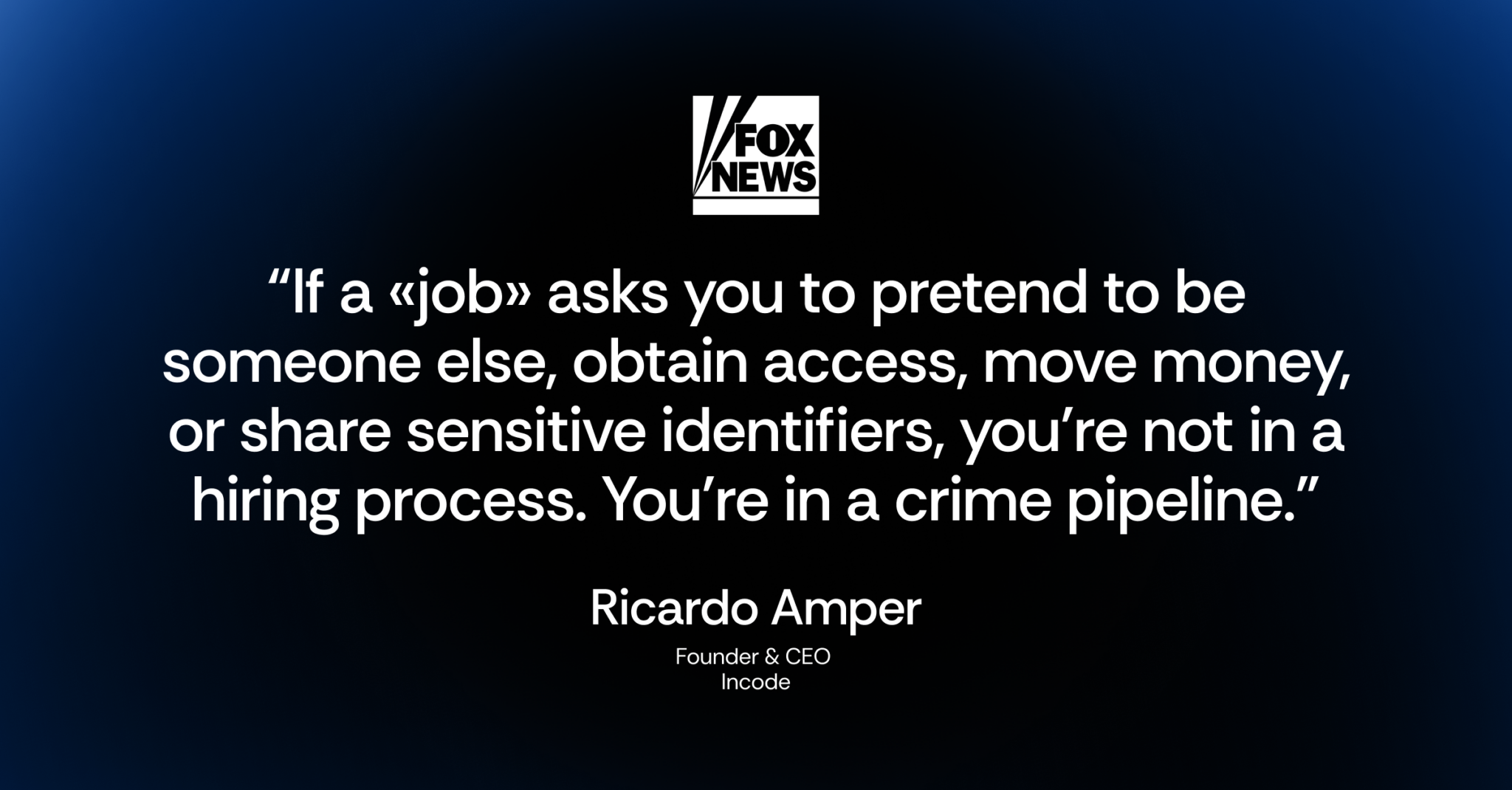
Amper offered guidance on warning signs for fraudulent job offers: requests to handle cryptocurrency, requests for personal financial account information, or offers that require an upfront purchase of equipment using a company-provided check. These are standard patterns in fraud recruitment schemes.
The broader context for the piece is the continued expansion of fraud-as-a-service ecosystems that lower the technical barrier for participation in identity fraud, increasingly drawing in non-technical participants who may not understand the consequences of their involvement.