

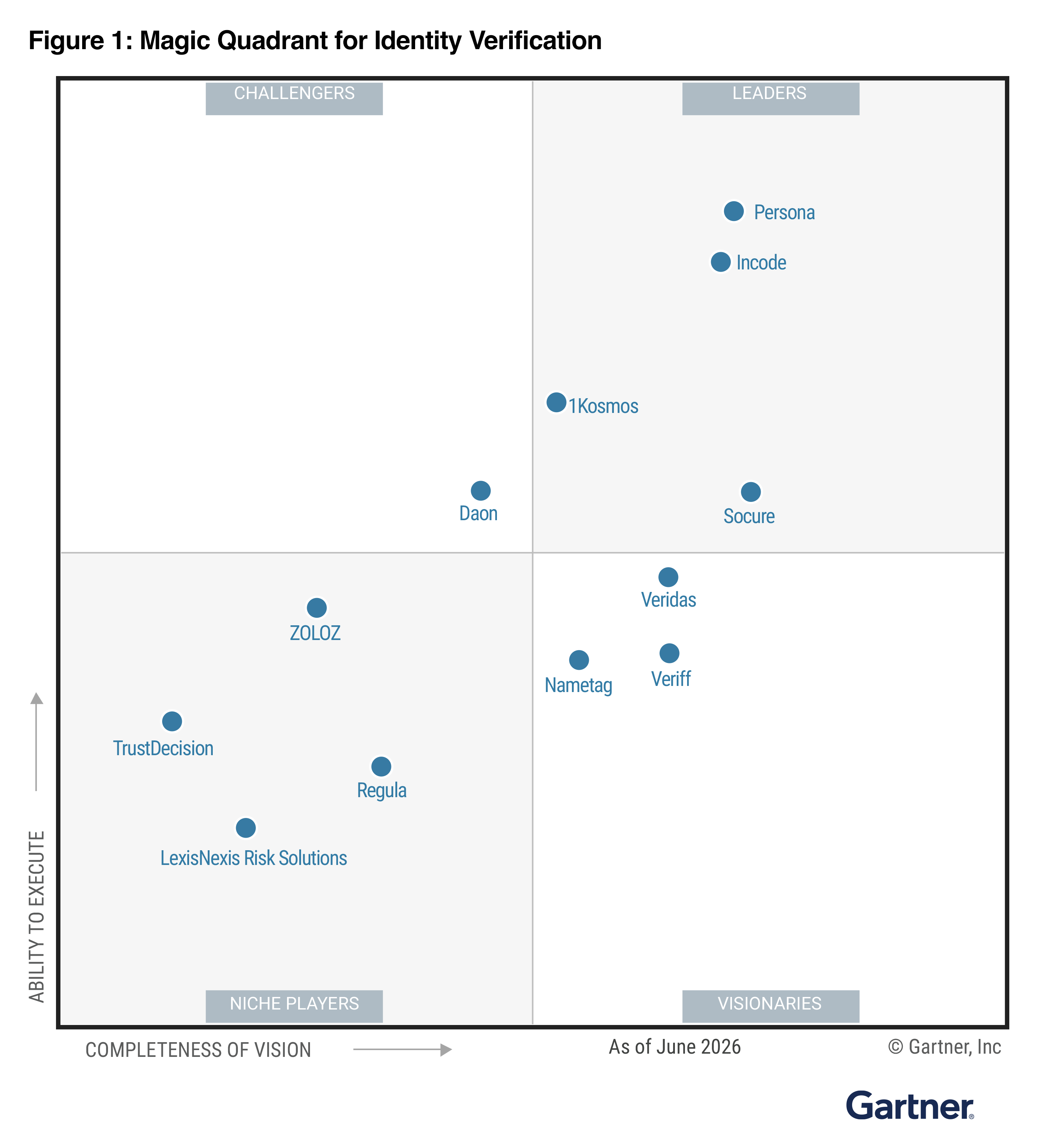



Incode Transforms the Privacy Landscape With Strategic Investment and Identiq Acquisition
Today, Incode announced its commitment to invest $100 million in privacy-preserving infrastructure, building on a day-one pledge to base all technological and business decisions on preserving users’ privacy.
This pledge is backed by the company’s acquisition of Identiq, a pioneer in cryptographic peer-to-peer identity validation. Founded by security, privacy, and identity industry veterans with decades of experience in developing peer-to-peer intelligence, Identiq’s network is built on proprietary fully anonymous identity resolution (FAIR) technology.
Identiq has spent nearly a decade and more than $50 million developing its patented FAIR technology, which solves a core problem in anti-fraud collaboration: how institutions can fight fraud together without giving up control of their customers’ data.
Together, these developments enable Incode to provide top-of-the-line, AI-powered fraud detection without unnecessarily exposing end users’ sensitive data.
"We have always believed that privacy and fraud prevention are not a tradeoff, but part of the same problem, solved together or not at all. Identiq is the piece that completes that Privacy by Design architecture, the natural culmination of the decisions we made on day one."
Ricardo Amper, Founder and CEO at Incode

Three Day-One Decisions About Our Architecture
Incode's privacy commitment rests on three architectural decisions made at the company's inception. Each one reflects the same core conviction: the less personal data collected, the better.
1. AI-First Identity Verification
Incode's approach is AI-first and agentic-ready. Manual human review isn’t necessary in the standard verification flow.
Our architecture preserves customer-configurable review options for escalation, compliance workflows, and specific edge cases, but prioritizes automation as the first approach.
2. On-Device Processing
For the most sensitive, highly regulated flows, such as age estimation and verification, Incode's latest AI models run biometric processing directly on the user's own device, with no tradeoff on accuracy.
Sensitive data never needs to leave the user's environment to complete a verification.
3. Collaboration Without Exposure
With the acquisition of Identiq, institutions can now detect repeat fraud patterns across a network without exposing customer personal data. No central data lakes. No data brokerage. The attack surface that traditional fraud collaboration required is minimized by design.
We didn’t make these decisions in a vacuum. We assessed where the industry was headed in 2015 and made early investments toward a better future.
The Industry Must Prepare to Pivot
Traditionally, the identity verification (IDV) industry has fought fraud using manual human review. This approach is tedious, costly, and not foolproof, particularly in recent years as AI democratized fraud at scale. Humans can only spot deepfake faces in images about 50% of the time, leaving an unacceptably high margin for error. Moreover, every human reviewer is an unnecessary set of eyes on private data.
As a result, the industry has pivoted toward AI, an essential technology in the fight against fraud.
Yet working with external vendors for advanced IDV invites its own risk, especially when dealing with sensitive consumer data such as digital documents and selfies. Many businesses store personally identifiable information (PII) in accordance with relevant regulations; they route it through third-party vendors; they pool it across institutions to improve their fraud protection program.
But every step in that chain invites risk.
In 2025, U.S. data breaches hit an all-time high with 3,322 reported incidents, a 79% increase over five years, according to the Identity Theft Resource Center. Third-party vendor involvement in breaches doubled in a single year, from 15% to 30%.
Hackers have recognized the pattern of third-party dependencies and are now actively exploiting it, with the goal of collecting a ransom or selling sensitive information and further enabling the cycle of fraud.
Yet this system of third-party data routing remained essential for fighting fraud in the first place. This has presented an incredibly challenging privacy-fraud paradox for IDV.
Solving The Privacy-Fraud Paradox
Incode has been fighting to solve that paradox since its inception. With the acquisition of Identiq and an additional investment of $100 million toward privacy-preserving architecture, we are unlocking:
- Collaboration without exposure: share fraud signals without sharing data
- Fraud detection without surveillance: network-level pattern detection with no access to underlying sensitive data
- Less friction for legitimate users: trusted behavioral patterns reduce friction in real time
All this, in addition to our existing commitment to AI-first IDV and on-device processing.
Privacy is fundamental, not a policy or afterthought. We have always known this. Over one decade and 400 million+ verifications down the line, our convictions are matched by independent validation.
Incode is compliant with SOC 2 Type 2 and HIPAA, and holds FedRAMP Ready status, ISO/IEC 27001, and the Kantara IAL2 Identity Verification Trust Mark. We are the only IDV provider that combines security, privacy, and AI-governance certifications in a single platform.
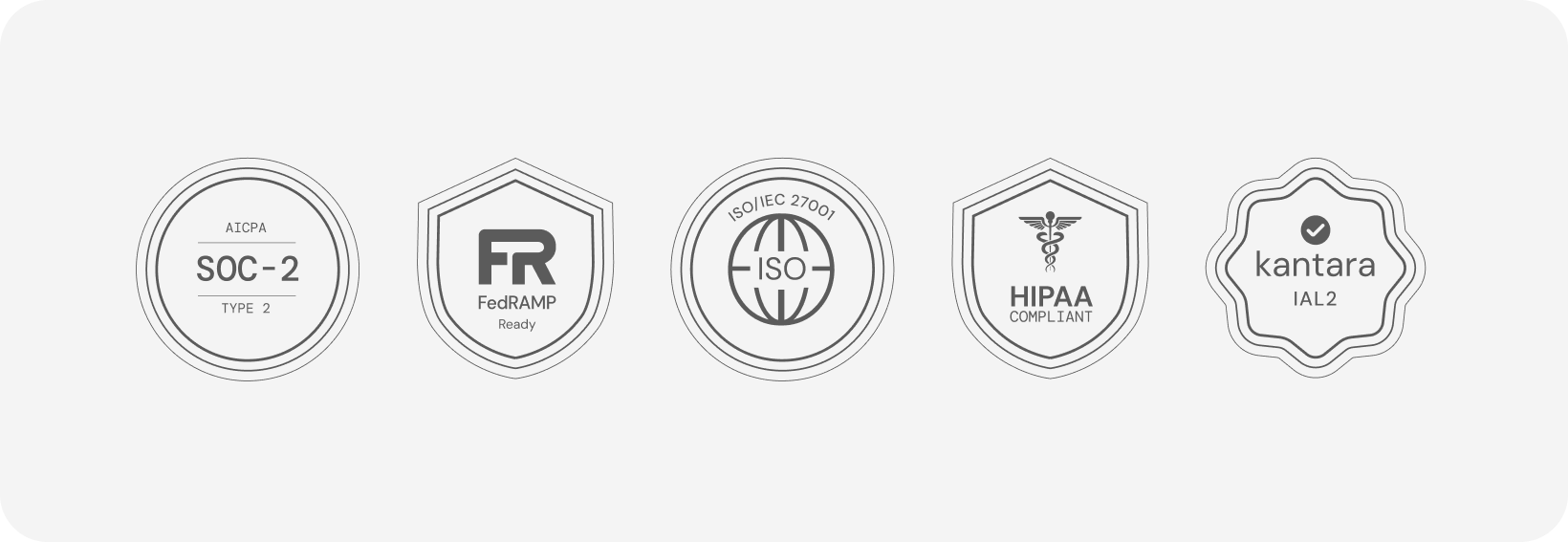
Incode’s IDV technology is thoroughly and independently verified.
Backed by enterprise-grade safeguards, including data loss prevention and continuous monitoring, Incode protects the personal information entrusted to it throughout its full lifecycle.
To learn more about why privacy is our architecture, visit the Incode Privacy Hub.